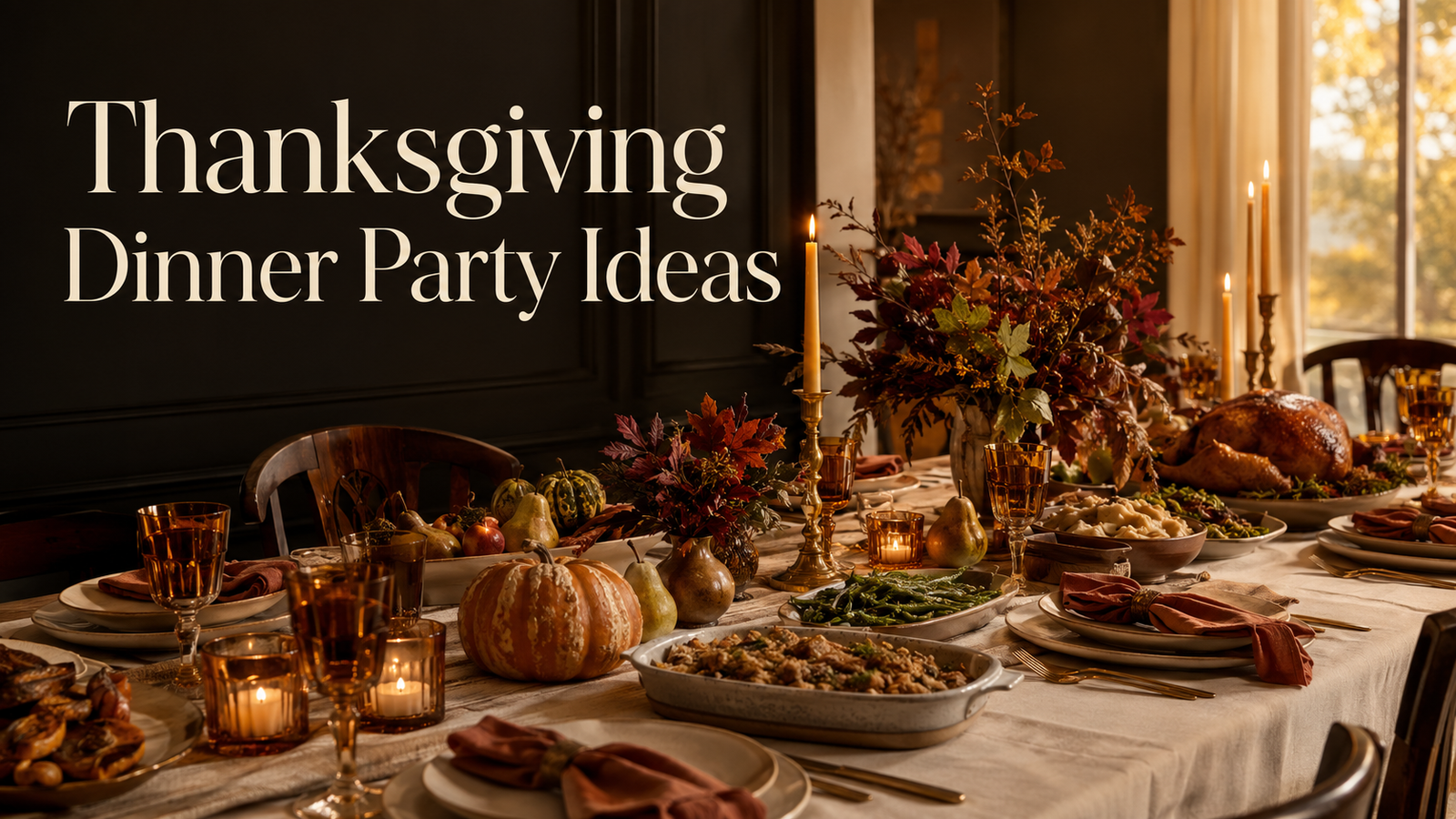
Thanksgiving Dinner Party Ideas
Thanksgiving · Dinner Party Guide
Thanksgiving Dinner Party Ideas
The three things that distinguish a Thanksgiving dinner party from a family dinner — and how to set a table, choose florals, and carry a fully designed aesthetic from invitation to dessert.
A Thanksgiving dinner party is a specific and distinct event type — and the distinction matters. It is not a family dinner with nicer tableware. It is a deliberately hosted occasion where the sequence of the meal, the design of the table, and the experience of each guest from the moment they sit down to the moment they leave has been considered in advance. The host who understands this produces a different event than the one who simply prepares a nice dinner at a well-dressed table.
The three sections below define what makes the dinner party framing work, show how to set a table in the Elegant Floral direction — the most enduringly appropriate for a formal Thanksgiving — and introduce the Art Nouveau direction for hosts who want something more editorial and less traditional.
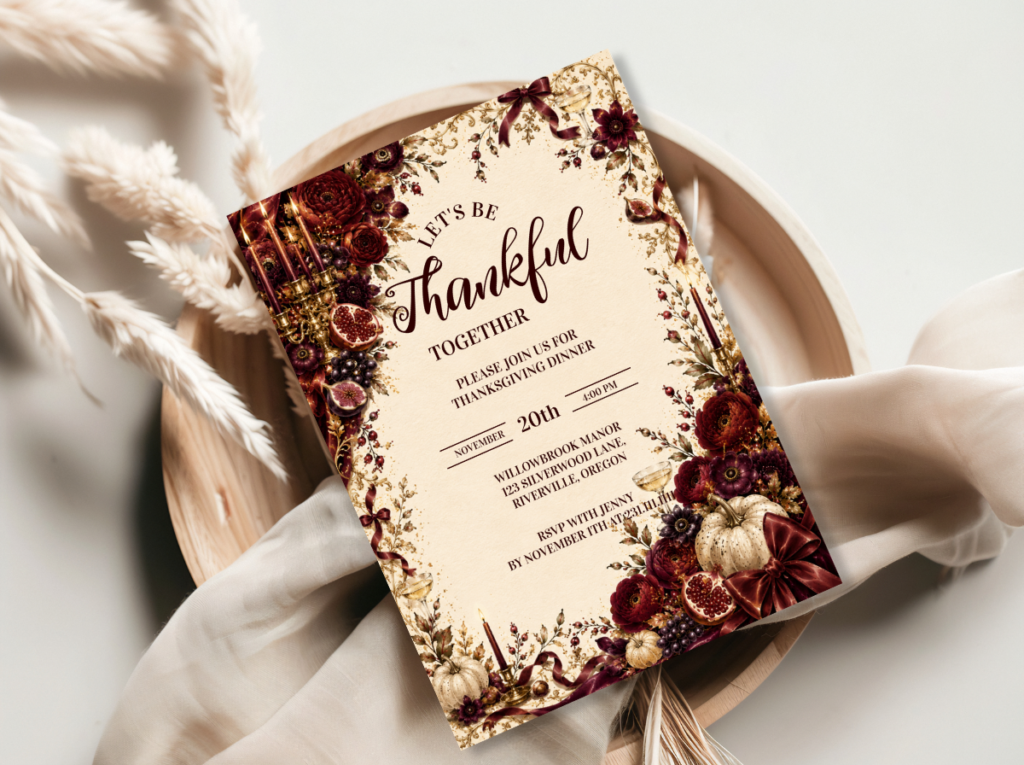
Browse the Opulent Thanksgiving Soirée collection at Lush Party Boutique — formal, dramatic stationery for the most beautifully hosted Thanksgiving table.
“Dinner party, not potluck — and the distinction is the whole point. A dinner party is a hosting act, not a gathering act. The host carries the structure; the guests carry only themselves.”
Section 01 What Separates a Dinner Party from a Family Dinner
A fixed seated menu with a clear course structure. A dinner party serves courses in sequence — an appetiser or starter, a main, and a dessert at minimum — and the host controls the pace at which each course appears. A buffet or all-dishes-on-the-table presentation is a family dinner format; it removes the hosted structure that defines a dinner party and returns the meal to the collective management of the table rather than the deliberate orchestration of the host. The menu does not need to be elaborate — three courses served with intention and at the right pace produce a dinner party experience that a twelve-dish buffet does not. A printed menu card at each place setting communicates the course structure to guests before the first plate arrives and removes any uncertainty about what is coming, which is part of what allows guests to relax fully into the meal.
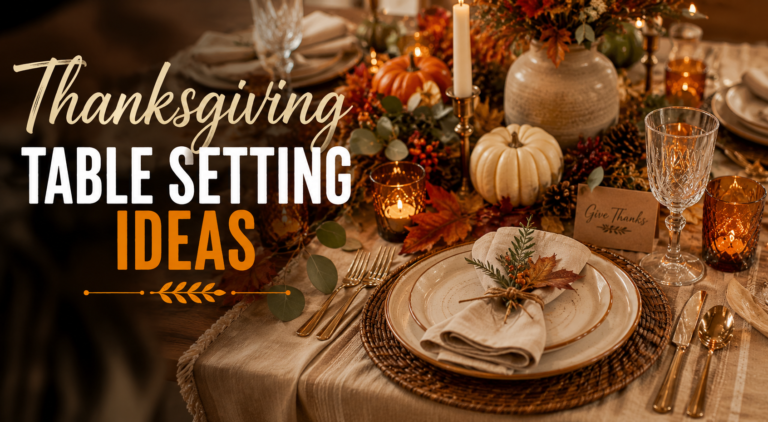
Place settings as designed objects, not functional arrangements. A dinner party place setting communicates that each seat was prepared for a specific person: a charger plate chosen for the table’s aesthetic direction, a folded napkin in a napkin ring or in a deliberate fold rather than placed flat, a water glass and a wine glass positioned correctly, a place card in the event’s typeface and palette, and a small favour or a menu card to complete the moment. None of these elements is expensive in isolation; together they communicate that the host designed this seat for this guest, which is the specific quality that makes a dinner party table feel different from a family dinner table even when the food and the people are identical.
One centrepiece focal point, not scattered decoration. A dinner party table has one clear visual anchor — a low, elongated floral runner with candlelight at two heights, a single dramatic arrangement at the table’s midpoint flanked by candles, or a line of identical vessels with matched botanical stems running the length — rather than multiple small arrangements distributed down the table. Multiple small arrangements produce a buffet aesthetic regardless of their individual quality; one clear centrepiece that runs the length or anchors the middle with two flanking candle clusters produces the seated dinner aesthetic that the dinner party format requires.
🍽️ Dinner Tip
A dinner party table needs one clear focal point — a low, elongated floral runner with candles reads as designed. Multiple small arrangements down the table reads as a buffet setup, not a seated dinner. The visual discipline of a single centrepiece decision is part of what communicates ‘dinner party’ before the first course is served.
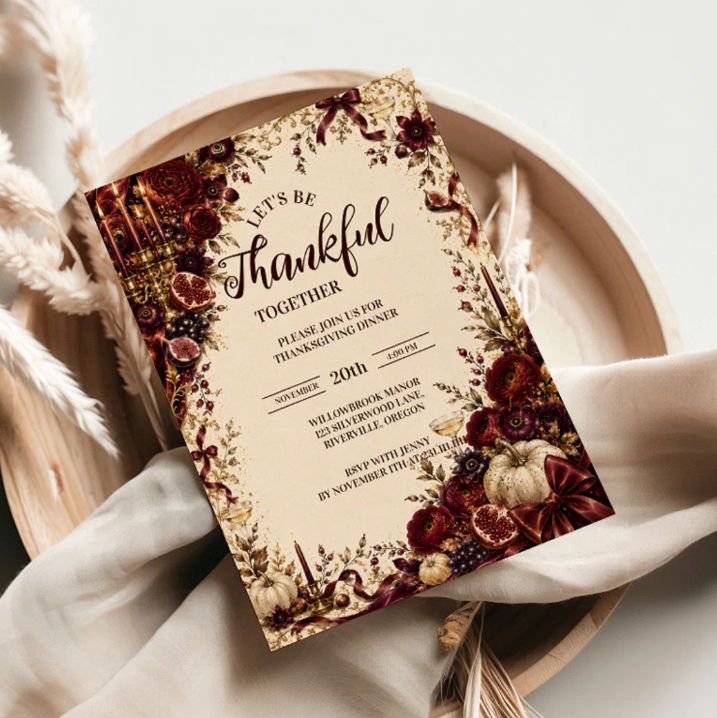
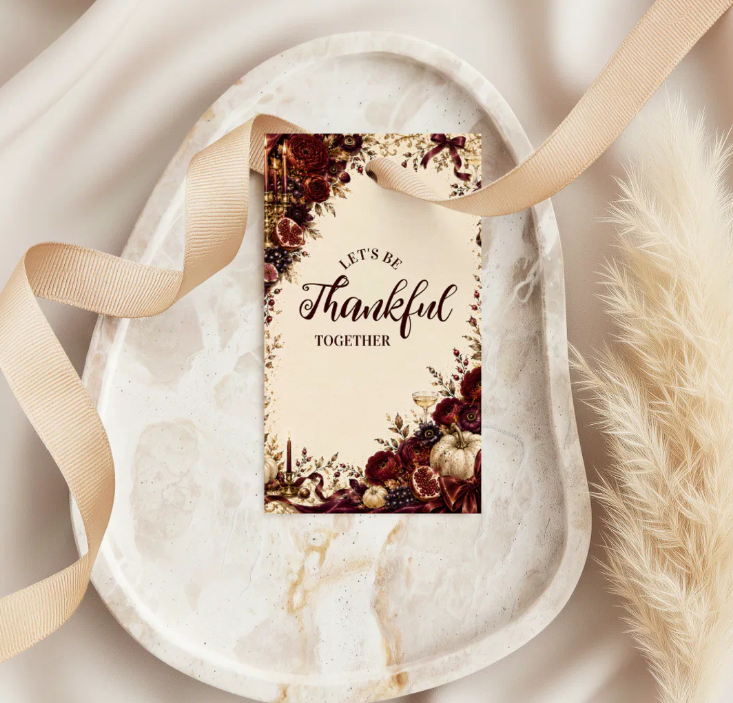
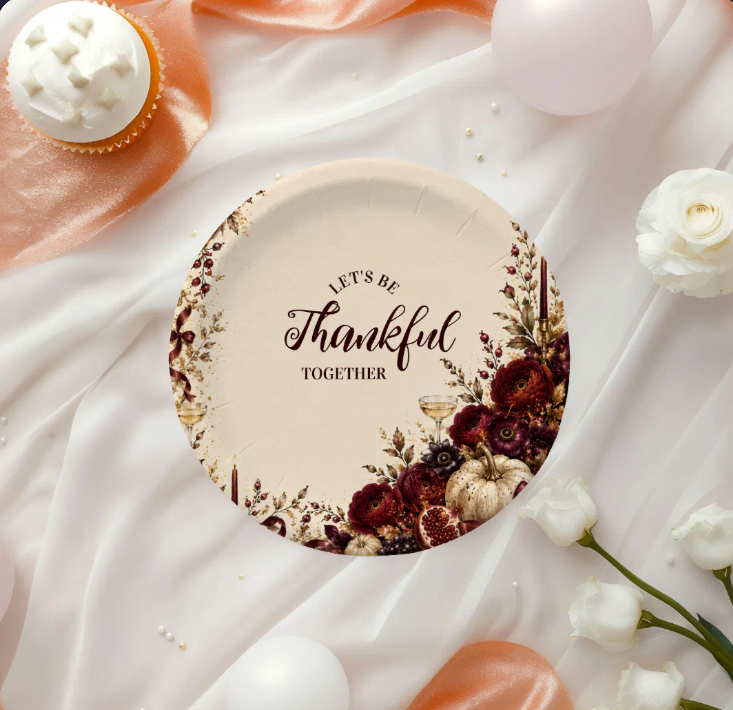
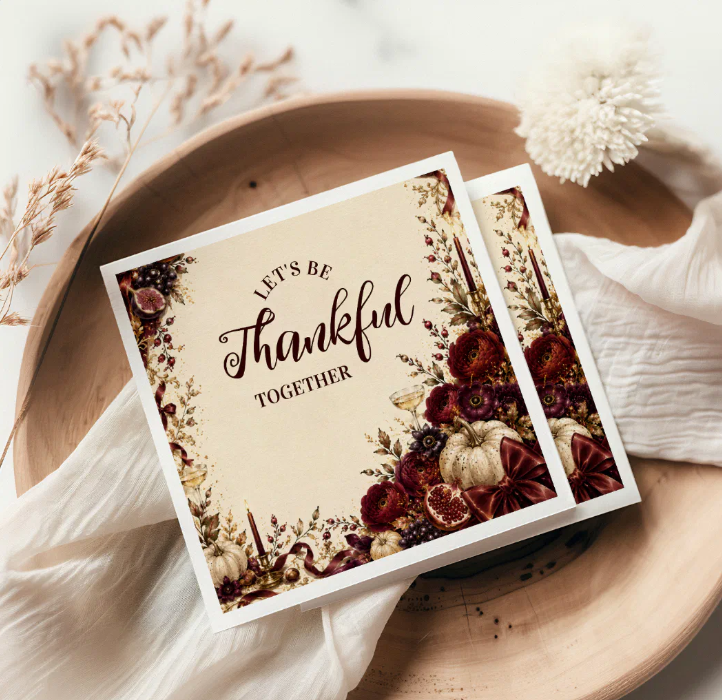
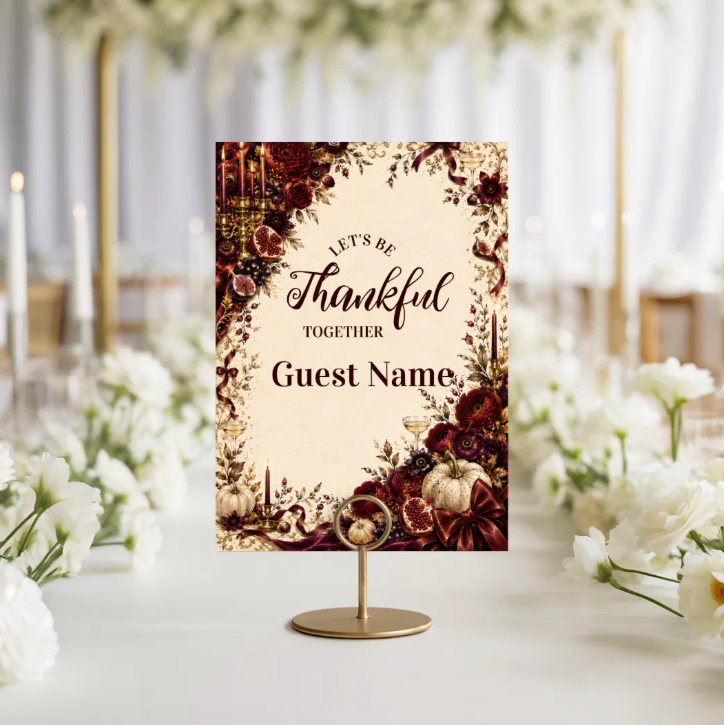
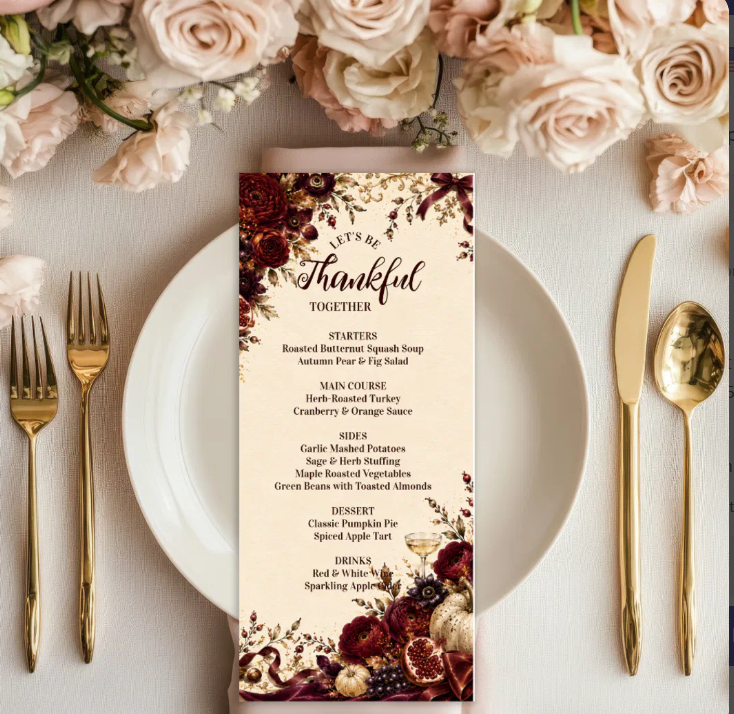
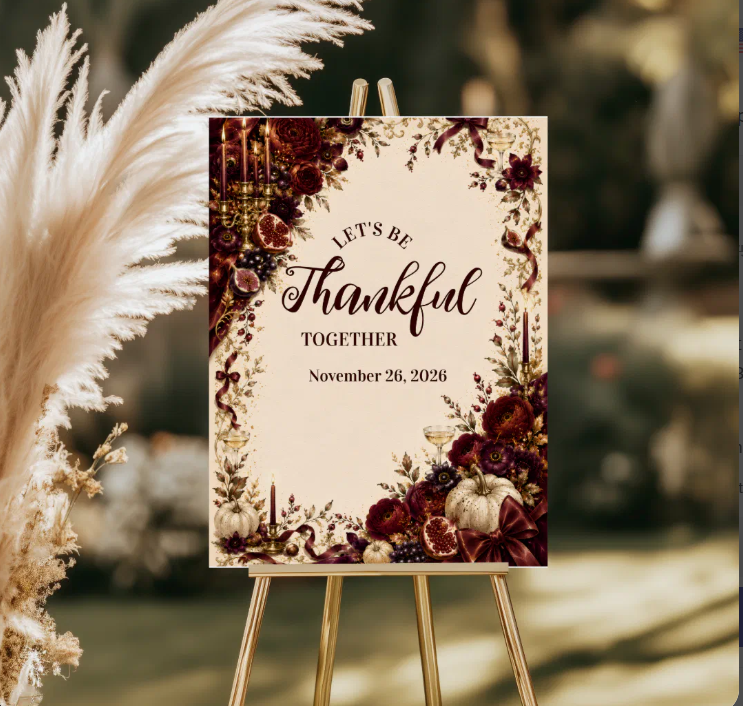
The Opulent Thanksgiving Soirée collection at Lush Party Boutique — formal invitation suites, place cards, and menu cards for the fully hosted Thanksgiving dinner party.
Section 02 Setting an Elegant Floral Thanksgiving Table
The Elegant Floral direction is the most enduringly appropriate for a formal Thanksgiving dinner party — warm-toned autumnal florals arranged with precision rather than abundance, in a colour palette that reads as specifically seasonal without the rustic-harvest visual vocabulary of dried wheat and burlap. It is the dinner party direction that communicates occasion rather than harvest.
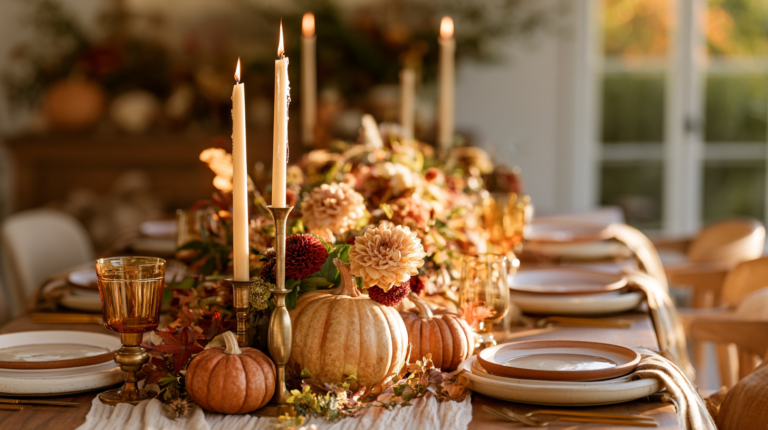
The floral centrepiece: Low and elongated. The florist’s benchmark for a dinner party centrepiece is that it should be shorter than the shortest wine glass on the table — which means nothing taller than twenty to twenty-five centimetres at its highest point. A centrepiece that rises above the wine glass blocks the sight lines between guests seated across the table and produces an interrupted conversation experience from the first course. Low does not mean sparse: a wide, dense arrangement of deep-toned autumnal flowers — richly coloured dahlias, garden roses in warm amber and rust, chrysanthemums in burnt orange and cream, deep-toned foliage — placed in a low vessel communicates fullness and occasion without creating the height that disrupts the table. Taper candles in holders that rise above the florals provide the visual height element without blocking sight lines, because the candle stem is transparent to the eye in a way that a floral mass is not.
The place setting layering: The Elegant Floral Thanksgiving place setting builds from the ground up. A charger plate in burnished gold, warm copper, or deep-toned ceramic as the base layer. The dinner plate stacked on the charger in cream or warm white — the neutral ground that allows the food and the charger’s warmth to coexist. A folded napkin in a coordinated warm tone — deep rust, harvest amber, or forest green — placed on the dinner plate or slipped through a gold napkin ring at the plate’s left edge. A place card in the event’s typeface and palette at the top of the plate or above the napkin, telling each guest that this seat was prepared for them specifically. The floral centrepiece’s palette should be carried into at least one element of the place setting — the napkin colour, the charger’s tone, or the place card’s accent colour — so that the table reads as a single designed object rather than as table elements and floral arrangement placed in the same space.
The glassware moment: A dinner party table includes a water glass and at minimum one wine glass per setting — positioned correctly, polished, and consistent across the full table. The glassware is one of the elements that most immediately communicates dinner party versus family dinner: polished matching glassware at every seat reads as hosted; mismatched functional glassware reads as assembled. The glass does not need to be expensive; it needs to be matched and clean. If the table’s aesthetic direction includes a decorative glass element — a small amber-toned glass vessel as part of the place setting, or a coloured water glass in the palette’s accent tone — it should be planned as part of the place setting design rather than added after the fact.
🍽️ Dinner Tip
Keep florals low enough that guests can see each other across the table — anything taller than a wine glass blocks conversation and photographs awkwardly at eye level. The rule applies to all elements of the centrepiece: the florals, the foliage, and any decorative branch or botanical stem. The candle taper is the one exception, because the slim profile of a taper candle above the floral arrangement adds vertical interest without blocking sight lines.
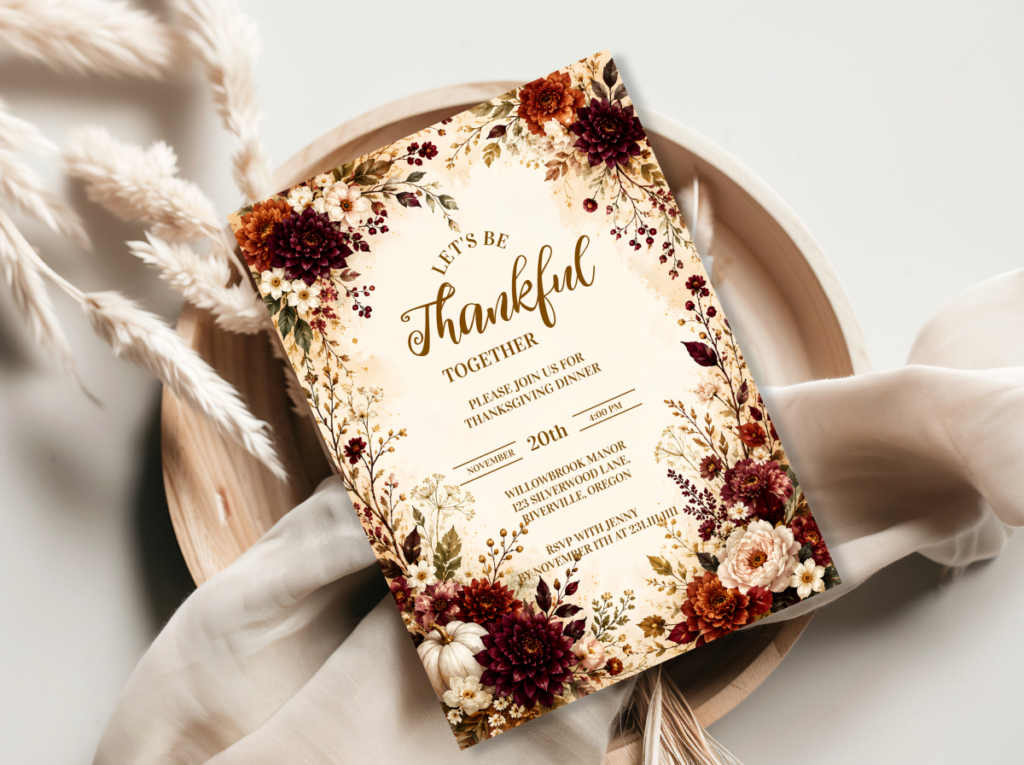
The Elegant Floral Thanksgiving Dinner collection at Lush Party Boutique — warm autumnal floral stationery for the most beautifully formal Thanksgiving place setting.
Section 03 A More Editorial Direction — Art Nouveau Thanksgiving
The Art Nouveau Thanksgiving centrepiece follows the same low-and-elongated principle as the Elegant Floral direction, but uses botanicals that reference the illustrative quality of the aesthetic: dark-stemmed dried alliums, architectural dried seed heads, deep-toned foliage in muted forest and sage greens, and minimal fresh flowers in deep jewel tones as accent elements rather than as the primary floral mass. The vessels should be dark-glazed ceramic, tarnished bronze, or deep-toned glass — materials that communicate the fin-de-siècle aesthetic of the movement without requiring period-specific objects.
The stationery in the Art Nouveau direction is the most distinctive element of the table: an invitation, place card, and menu card suite featuring the organic linework and botanical illustration characteristic of the movement communicates the aesthetic direction to guests before they see the table, in the same way that any well-designed stationery suite communicates the dinner party’s register before the event begins. A host who wants a Thanksgiving dinner party that guests remember as specifically, distinctly different from every other Thanksgiving they have attended will find the Art Nouveau direction the most effective route to that result.
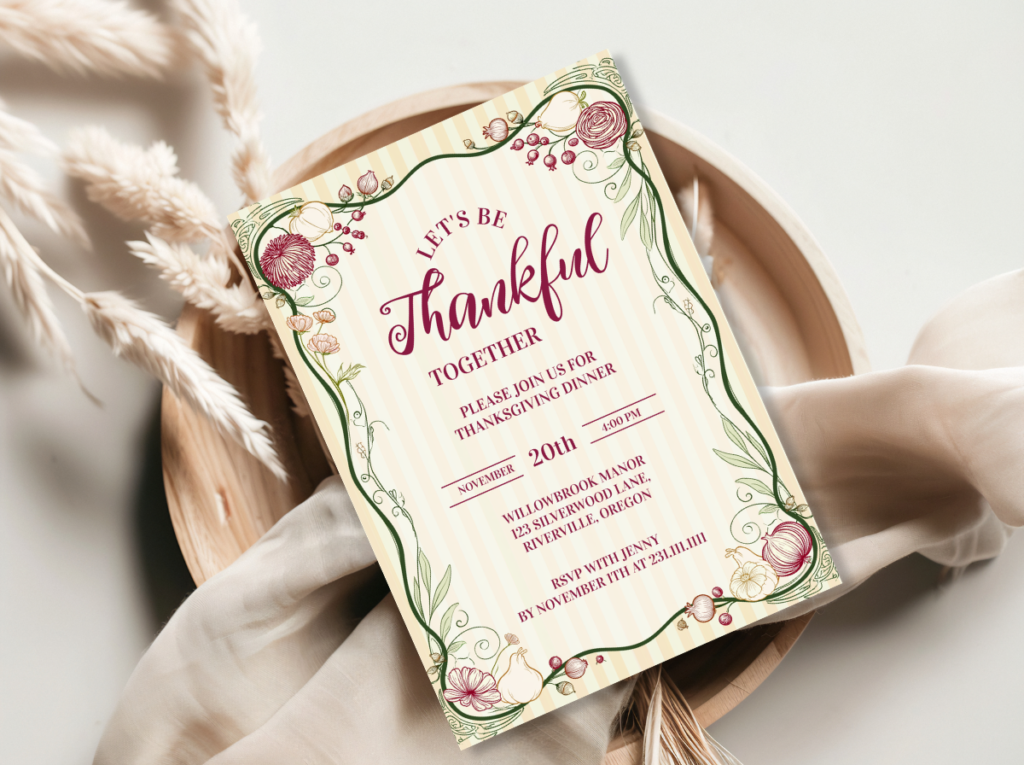
The Art Nouveau Thanksgiving Dinner collection at Lush Party Boutique — organic linework and muted jewel-tone stationery for the most editorial Thanksgiving dinner party direction.
Frequently Asked Questions
How is a Thanksgiving dinner party different from a regular family dinner?
The distinction is structural rather than culinary. A regular family Thanksgiving dinner centres on shared abundance — many dishes on the table simultaneously, a buffet or pass-around format, and a meal managed collectively by the table rather than hosted by a single person. A Thanksgiving dinner party centres on hosted structure: courses served in sequence at the host’s pace, a place setting that was designed for each specific guest, a centrepiece that was chosen as a visual anchor rather than placed as a seasonal decoration, and a stationery suite — invitation, place card, menu card — that communicates the occasion’s formality before the first plate arrives. The food may be identical; the experience is entirely different.
How many courses does a Thanksgiving dinner party need?
Three is sufficient for a fully hosted dinner party experience: an appetiser or starter (a soup course, a small salad, or an amuse-bouche that signals the meal’s beginning), a main course with the Thanksgiving centrepiece dish and its accompaniments, and a dessert. Four courses — adding either an intermediate course between starter and main, or a cheese course between main and dessert — is appropriate for a more formal gathering where the duration of the meal is part of the occasion. More than four courses at a home dinner party typically extends the event beyond the point where guests can sustain comfortable anticipation and begins to read as catering rather than hosting. The printed menu card matters here: it tells guests how many courses are coming, which allows them to pace themselves appropriately and removes any uncertainty that would otherwise occupy their attention during the early courses.
Do I need matching china, or can I mix pieces at a Thanksgiving dinner party?
Mixing is not only acceptable but often produces a more interesting result than a matched set — provided the mixing is intentional rather than the result of using whatever is available. Intentional mixing means choosing pieces that share at least one quality: the same colour family, the same material tone (all warm-toned rather than all cool-white), or the same finish (all matte, all bone, all glaze). A dinner plate in cream stoneware beside a soup bowl in aged white and a charger in burnished gold reads as a considered combination because the tones are warm and compatible across all three pieces. The same cream stoneware beside a bright white salad plate and a clear glass charger reads as an incomplete set because the pieces do not share a temperature or a finish. The charger plate is the element most capable of unifying mixed pieces — a charger in a consistent tone beneath varying plates creates a visual ground that makes the variation above it read as intentional.
Courses · Centrepiece · Place Card · Menu Card
Shop Thanksgiving Dinner Party Stationery
Invitations, place cards, and menu cards for the fully hosted Thanksgiving dinner party — opulent soirée, elegant floral, and Art Nouveau directions.