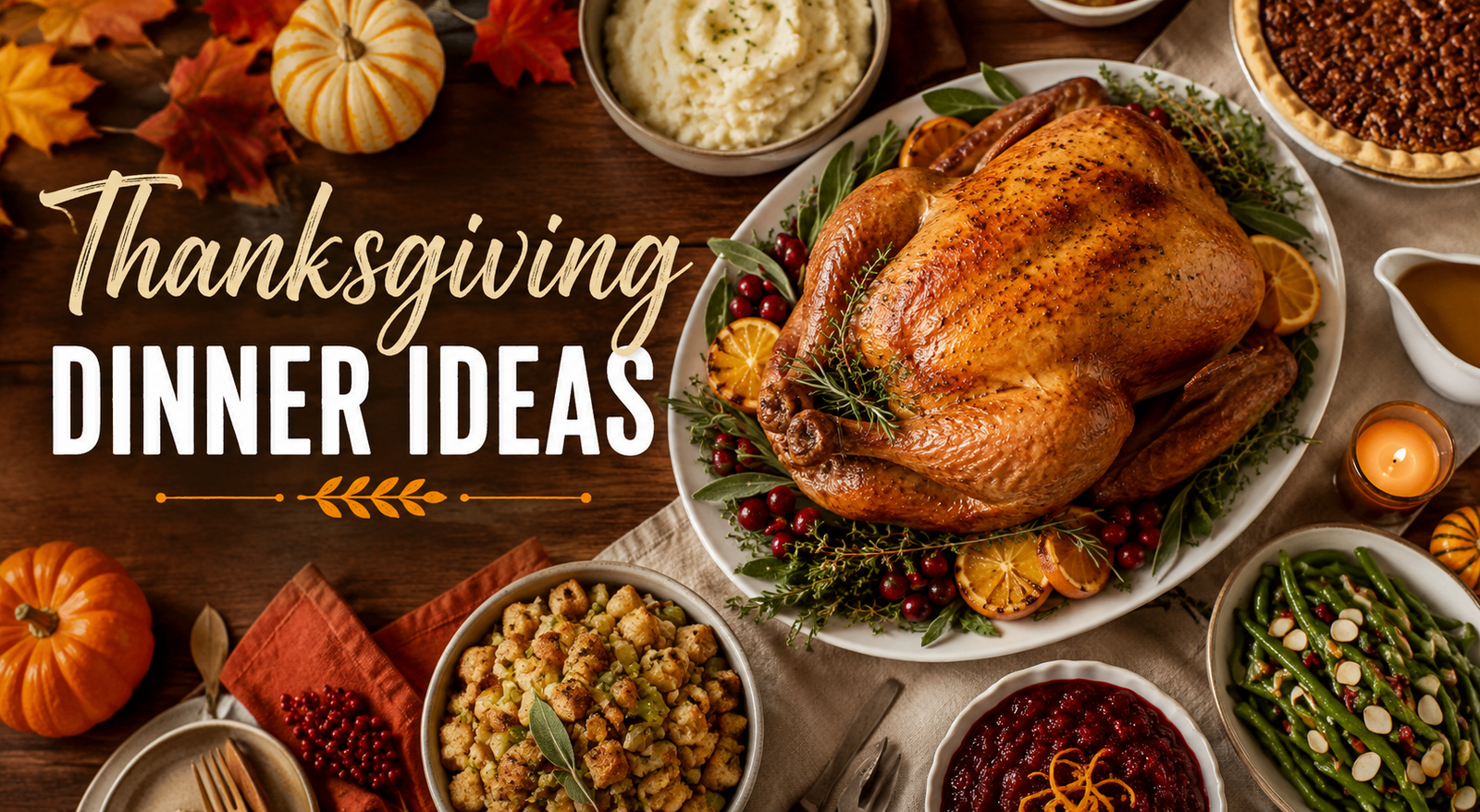
Thanksgiving Dinner Ideas
Thanksgiving · Dinner Ideas Guide
Thanksgiving Dinner Ideas
The three things that anchor any Thanksgiving dinner as a tradition, the nostalgic table direction that makes a meal feel like a memory, and how to introduce something new without disrupting what already works.
A Thanksgiving dinner is different from every other dinner of the year — not primarily because of what is served, but because of what it carries. The dishes, the table, and the room hold the accumulated weight of every previous Thanksgiving in the same space: the tablecloth that has been folded and stored and brought out again, the serving dish that was a wedding gift two generations ago, the toast that started as a joke and became a ritual. The Thanksgiving dinner that feels most like Thanksgiving is the one where at least one of these recurring elements is present, regardless of how everything else has changed.
The sections below cover what makes a Thanksgiving dinner feel specifically like a tradition rather than simply a large meal, a table direction that carries the heirloom and nostalgic register forward, and a practical note on introducing something new without disrupting what already works.
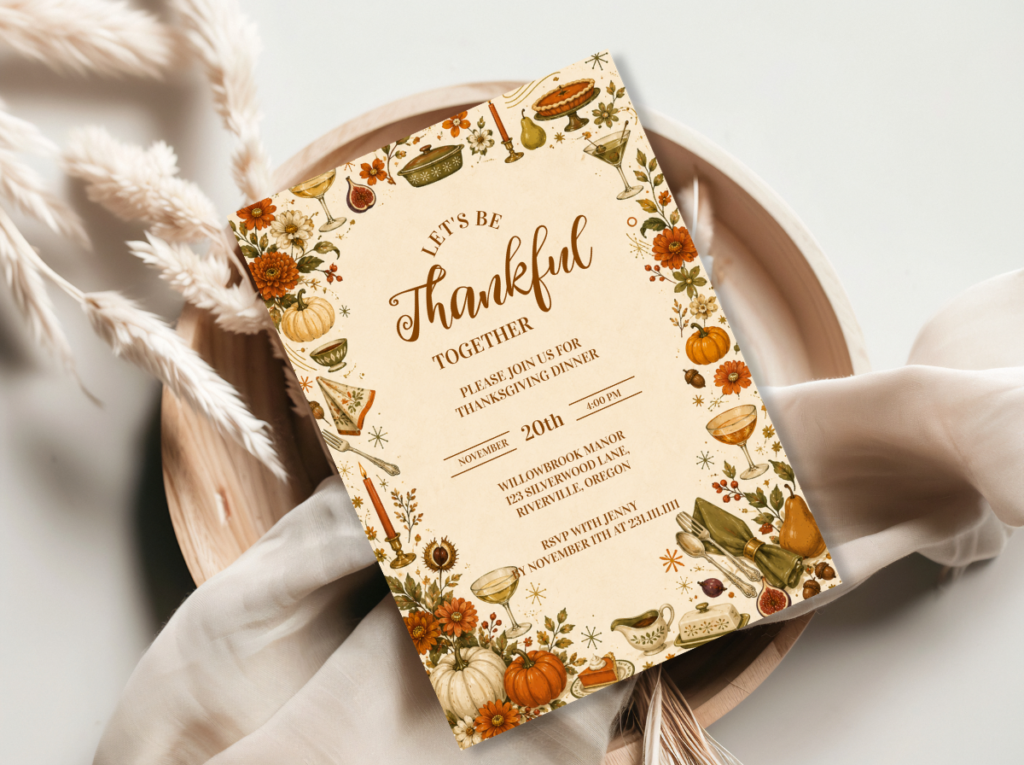
Browse the Vintage Thanksgiving Supper Club collection at Lush Party Boutique — warm, nostalgic stationery in the heirloom dinner aesthetic.
“Some dinners are meals, and some are memories with a menu attached. The difference is almost never the food — it is the detail that repeats.”
Section 01 What Actually Makes a Dinner Feel ‘Thanksgiving’
Three things anchor a Thanksgiving dinner as a tradition rather than a large meal — and none of them require a formal dinner party format or an elaborate table setting to produce their effect.
A shared serving moment. The passing of dishes around the table — or a carving moment at the table before serving begins — is one of the oldest and most universally recognised signals that this meal is different from an ordinary dinner. The shared serving moment is not about the food; it is about the collective act of receiving from each other at the table rather than receiving from the kitchen individually. A platter passed from hand to hand around the table produces a specific quality of social warmth that a plated individual service — however beautifully executed — does not. It is the ritual of the shared dish that communicates ‘Thanksgiving’ rather than the dish itself.
A warm, low-lit room. The lighting quality of a Thanksgiving dinner matters more than the lighting quality of most other meals, because Thanksgiving is an evening celebration by temperament even when it begins at midday. Overhead lighting at full brightness reads as functional; warm, lower-level lighting — a dimmed overhead, candles at the table, a lamp in the corner rather than a ceiling fixture — reads as gathered and intentional. Even the most casual Thanksgiving dinner benefits from this shift: it is not a formality gesture but an atmosphere gesture, and it costs nothing beyond the decision to adjust the dimmer or light the candles before guests arrive.
One heirloom or recurring element. A single element that repeats year to year — the same tablecloth brought out of storage, the same toast given by the same person, the same dish that has appeared at every Thanksgiving anyone in the room can remember — is the element that transforms a large dinner into a tradition. The recurring element does not need to be genuinely old; it needs to be consistent. A toast that was made at the first Thanksgiving a couple hosted together, repeated every year since, carries the same ritual weight as an heirloom serving dish that has been in the family for three generations. The weight comes from the repetition, not the age.
🍴 Dinner Tip
Keep one thing the same every year — a specific dish, a toast, a tablecloth — even as everything else changes. That repetition is what makes a Thanksgiving dinner feel like a tradition instead of just a big meal. The consistency communicates that this is not simply a large November dinner; it is a gathering with its own specific identity that belongs to this group of people.
The Vintage Thanksgiving Supper Club collection at Lush Party Boutique — warm, nostalgic stationery in the heirloom dinner register.
Section 02 A Classic, Nostalgic Table Direction
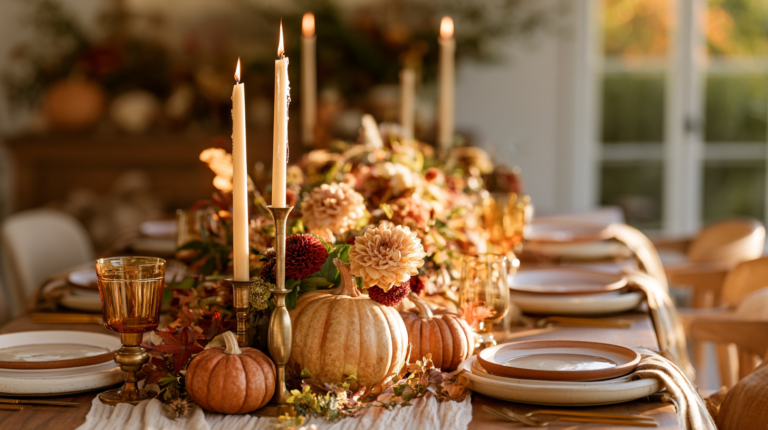
The Vintage Thanksgiving Supper Club direction is the table aesthetic that most naturally accommodates the heirloom register — the specific quality of a table that looks as though it has been set many times before and will be set many times again. It draws from the visual language of the mid-century American supper club: warm amber tones, a slightly aged quality in the materials, the specific combination of formal and familiar that characterises a gathering where everyone knows their place at the table.
The heirloom mix approach. A table in the Vintage Supper Club direction is not a matched set of new tableware. It is a mix that reads as accumulated over time — a dinner plate that was a wedding gift beside a side plate from a different decade beside a serving dish that came from a grandparent’s kitchen — where the unifying element is the palette (warm cream, aged white, burnished amber, tarnished gold) rather than a matched pattern or manufacturer. The mix that reads as heirloom rather than as thrifted is the one with one or two genuinely old or family-origin pieces among newer ones: the old pieces anchor the mix and give the newer ones a context to inhabit. A table of entirely new matched pieces reads as staged; a table of entirely mismatched thrifted pieces reads as improvised; a table with one or two real pieces among complementary new ones reads as inherited.
The table’s palette and textile register. Warm cream, aged linen, burnished gold, and a runner in a natural or slightly aged textile — raw linen with a selvage edge, or a woven cotton in a warm neutral — provide the material ground for the Vintage Supper Club table. The centrepiece should follow the warm amber palette: florals and botanical elements in the harvest colour family rather than bright or cool-toned alternatives, in a vessel with an aged or patinated quality — a tarnished brass jug, an earthenware crock, a painted ceramic in a warm muted tone. Place cards in the Vintage Supper Club stationery register — available at Lush Party Boutique in the Heirloom Pumpkin Thanksgiving collection — complete the direction by bringing the table’s warm amber and pumpkin motif palette into the printed element that each guest holds in their hand.
🍴 Dinner Tip
Mix one or two genuinely old pieces — actual heirloom china, a vintage serving dish — with new tableware. An entirely new matched set reads as staged; a full mismatch reads as thrifted. One or two real pieces anchor the mix and give the newer ones a context to inhabit. The heirloom reading comes from the presence of the old pieces, not from the absence of new ones.
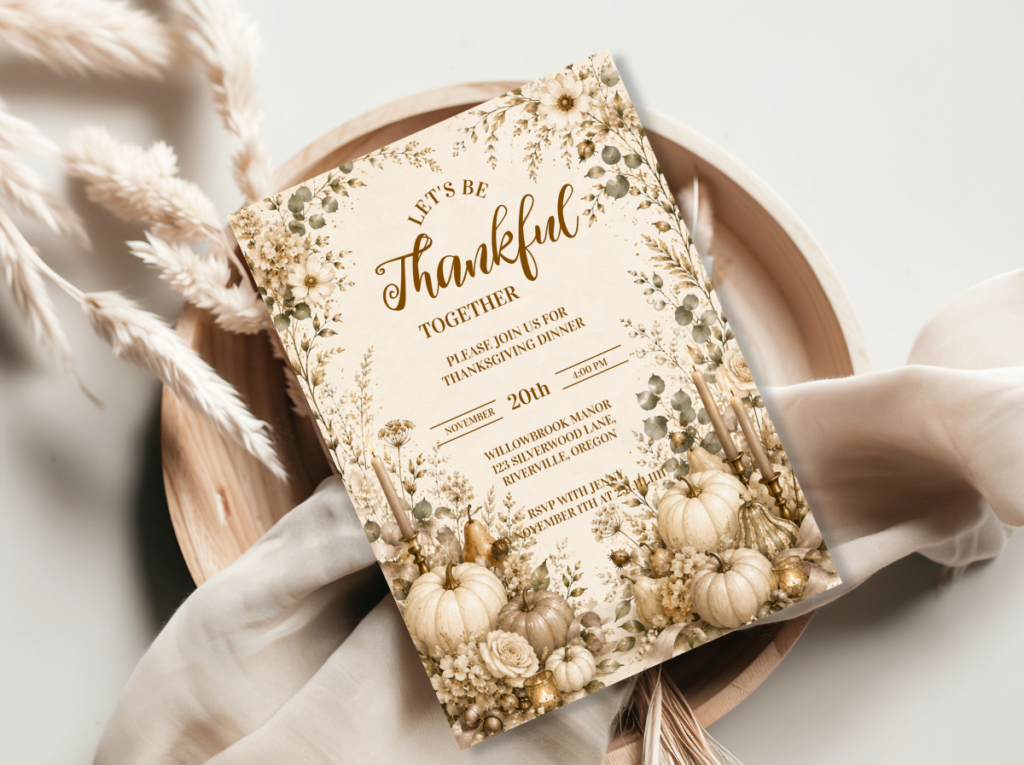
The Heirloom Pumpkin Thanksgiving collection at Lush Party Boutique — warm amber and pumpkin-motif place cards and stationery for the nostalgic Thanksgiving table.
Section 03 Balancing Tradition with Something New
The risk of a highly traditional Thanksgiving dinner is that it becomes unchangeable in a way that serves the tradition more than it serves the people at the table. Every recurring Thanksgiving dinner benefits from one new element introduced each year — not to displace what works, but to keep the gathering alive rather than merely preserved.
The one-new-thing principle. Introduce one new dish or one new hosting detail at each Thanksgiving — not several simultaneously. One new side dish beside the established ones gives it the chance to be properly tasted and assessed without the disruption of a substantially altered menu. One new table detail — a different centrepiece vessel, a new napkin colour, a printed place card where there was none before — adds interest without requiring the table to be restaged from the beginning. The new element that is welcomed becomes next year’s familiar element and the year after’s established element; the one that does not work is easily retired without loss. Multiple new elements introduced simultaneously are harder to assess individually and harder to retire selectively if some work and some do not.
When a new element becomes a new tradition. The recurring element does not need to be planned as a tradition in advance. Some of the strongest Thanksgiving traditions began as improvisations — a toast improvised when someone couldn’t find the words they had prepared, a dish made from whatever was in the cupboard because the original plan failed — that were remembered warmly and requested again the following year. The quality that makes something a tradition is not that it was deliberately designed as one, but that it was experienced as worth repeating. The host’s job is not to design traditions; it is to create the conditions under which the meal is warm and unhurried enough that the moments worth repeating have space to emerge.
The Vintage Thanksgiving Supper Club collection at Lush Party Boutique — nostalgic stationery for the Thanksgiving dinner that feels like it has been happening for years.
Frequently Asked Questions
How do I make a simple Thanksgiving dinner feel special without overhauling everything?
Three small changes produce the largest impact on a simple Thanksgiving dinner’s atmosphere without requiring any structural overhaul. First, lighting: dim the overhead and light candles at the table before guests sit down — this single change shifts the room’s atmosphere from functional to gathered. Second, one printed element: a place card at each seat or a simple menu card on the table communicates that the meal was prepared for specific people, which is the quality that distinguishes a hosted dinner from a family meal. Third, a deliberate toast before the first course — even a very simple one — marks the beginning of the meal as a specific shared moment rather than a transition from standing around the kitchen to sitting at the table.
What’s a good way to start a new Thanksgiving tradition?
The most durable new Thanksgiving traditions are the ones that involve everyone at the table rather than being performed by the host alone. A tradition where each guest names one thing they are grateful for — however briefly and however informally — before the first dish is passed creates a shared opening moment that belongs to the whole table rather than to the host’s preparation. A tradition of one new dish per year — a side that the host has not made before — creates anticipation and a recurring element of discovery. A tradition of a specific piece of music playing during the meal, or a specific candle lit at the beginning and extinguished at the end, creates a sensory frame around the dinner that makes it distinct from every other evening meal of the year. Any of these, repeated for two or three years, becomes ‘what we do at Thanksgiving.’
Do I need matching dishware for the Thanksgiving dinner to feel put-together?
No — a matched set is neither necessary nor always the most appropriate choice for a Thanksgiving dinner that wants to carry a warm, heirloom register. The table that reads as most authentically Thanksgiving is often the one where at least one piece of tableware has a history: the serving dish from a grandparent’s kitchen, the wine glasses that appeared at every holiday for twenty years, the tablecloth that has been washed and folded and brought out again more times than anyone can count. A fully matched new set reads as a table that was purchased for the occasion; a mix that shares a palette and a material temperature reads as a table that has been accumulated over time. What the table needs is not matching pieces but pieces that belong to the same warm, aged register — and a charger plate beneath the different dinner plates provides the consistent visual ground that unifies a mix into a coherent setting.
Shared Serving · Candlelight · One Recurring Thing
Shop Thanksgiving Dinner Stationery
Place cards, menu cards, and warm nostalgic stationery for the Thanksgiving dinner that feels like it has been happening for years.