Thanksgiving Potluck Ideas
Thanksgiving · Potluck Guide
Thanksgiving Potluck Ideas
How to unify a spread that arrives in twelve different containers, organise who brings what without duplication, and add the few touches that make it feel hosted.
The Thanksgiving potluck has one logistical advantage over a fully hosted dinner: the host does not cook alone. It has one aesthetic disadvantage: a food table where twelve dishes arrive in twelve different containers from twelve different kitchens will look like exactly that unless someone makes an active decision to tie it together. The decision does not require matching serving ware from every contributor or advance coordination of dish aesthetics. It requires three specific host-side decisions that apply to whatever arrives.
The sections below cover those three decisions, the sign-up structure that prevents dish duplication, and the light hosting touches that make a potluck feel like a celebration rather than a community food drop.
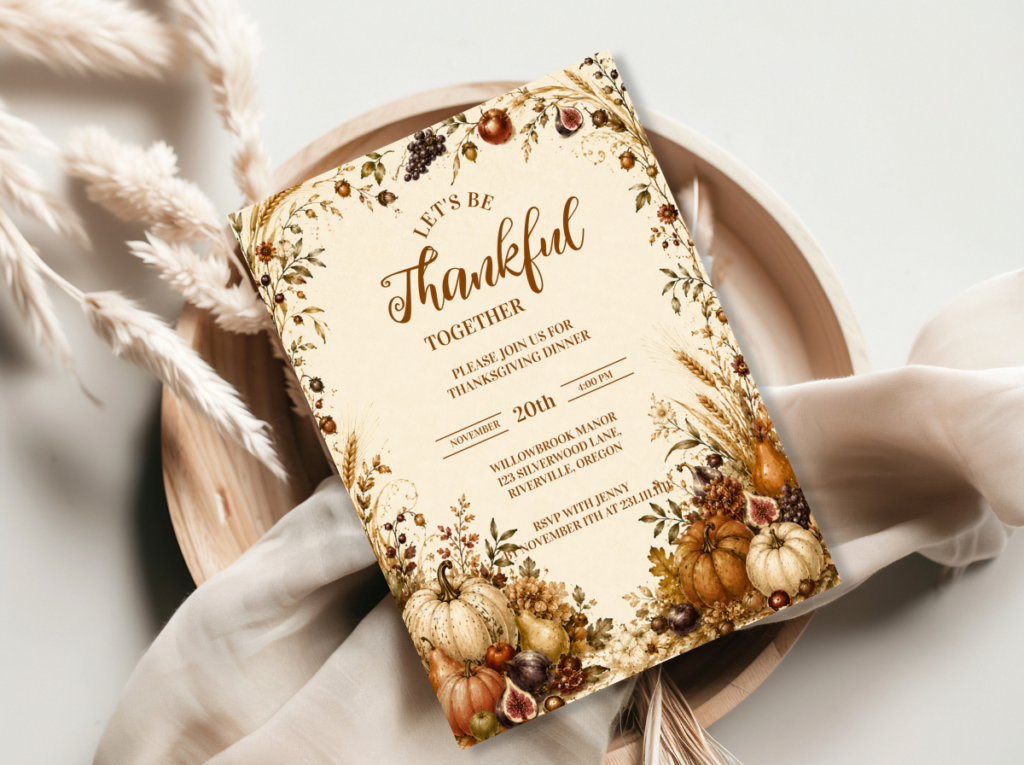
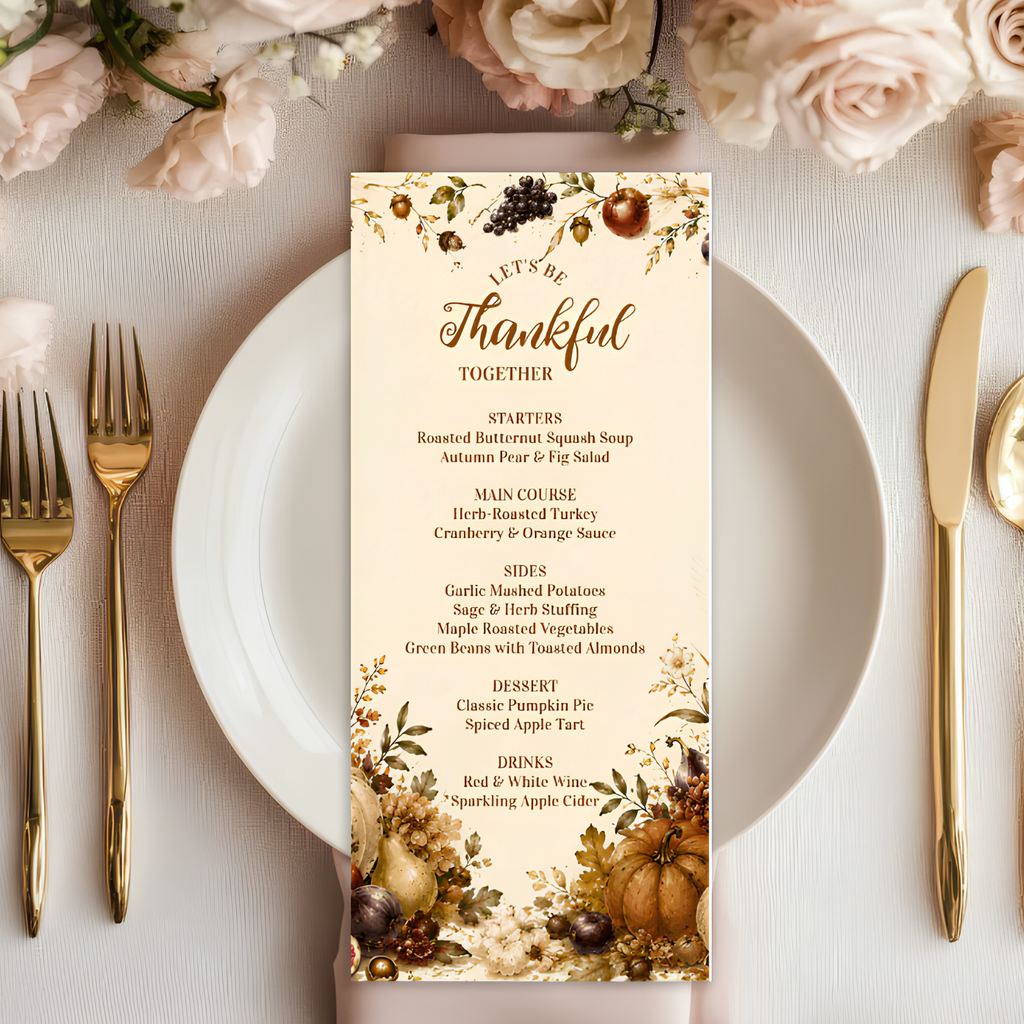
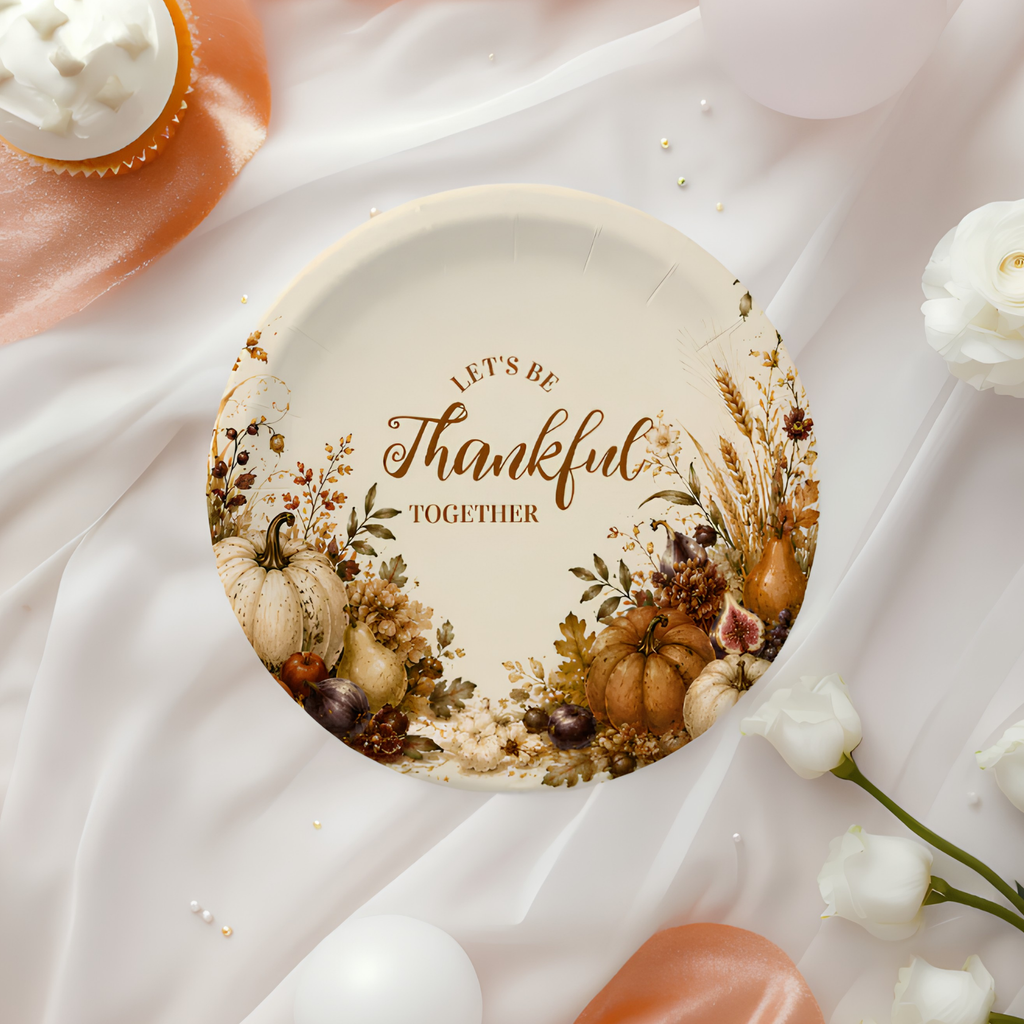
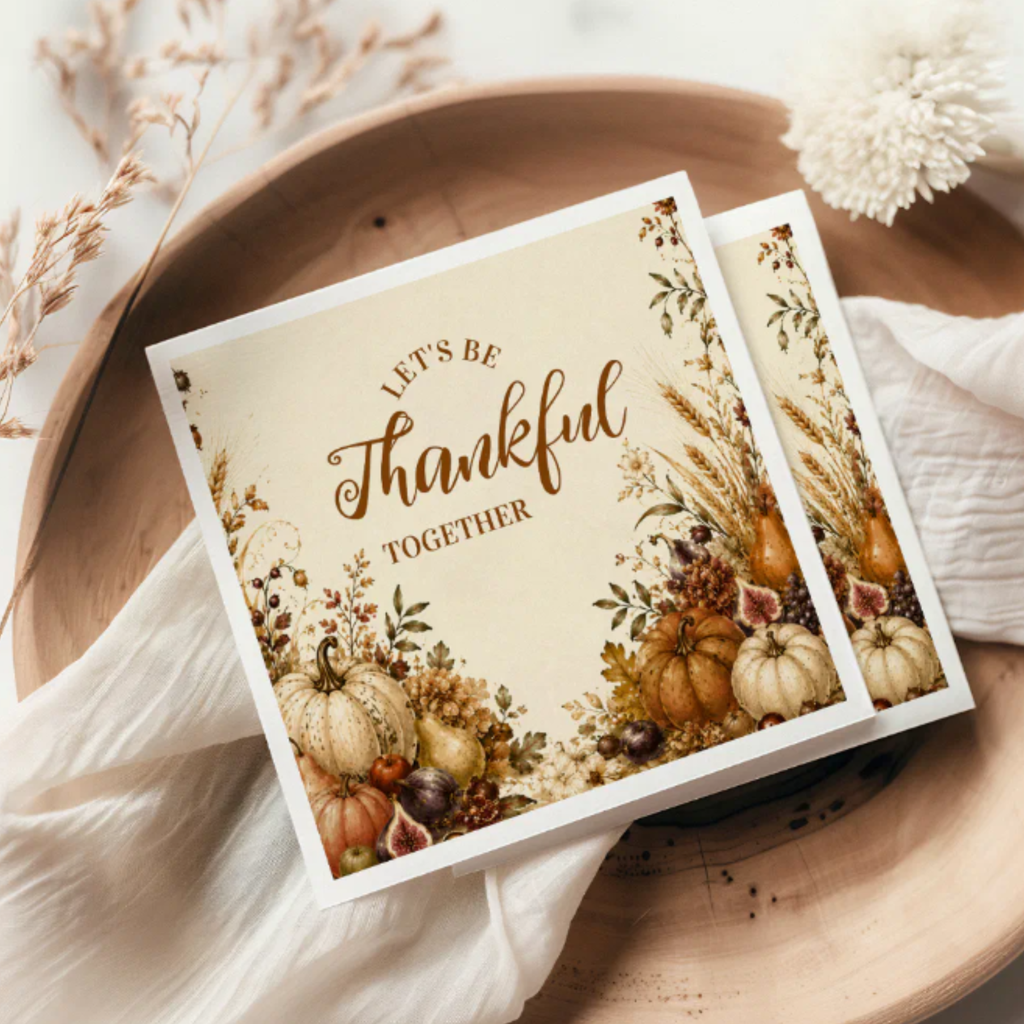
Browse the Rustic Harvest Thanksgiving collection at Lush Party Boutique — dish labels, tent cards, and warm harvest stationery for a styled potluck table.
“Everyone brings a dish, no one owns the whole table — until the styling ties it together. That’s the host’s job in a potluck: not the cooking, but the coherence.”
Section 01 Making Mismatched Dishes Look Intentional
Three host-side decisions unify a potluck spread that arrives in a dozen different containers and from a dozen different aesthetic sensibilities.
Consistent labelling across every dish. A matching set of dish labels — small tent cards or tag labels in the same palette and typeface, one at the front of every dish regardless of what is inside the container — creates the visual thread that ties the spread together before a single serving piece is transferred. The labels communicate the dish name, flag any key ingredients that guests with dietary preferences might want to know about, and most importantly make the table read as organised rather than assembled. The label design does not need to be elaborate: a small folded card in a warm cream ground with the dish name written or printed in a warm-toned typeface is sufficient. What matters is that every dish has one, and that every label looks the same.
A shared serving-ware layer. If the host provides three or four matching serving platters or bowls and transfers incoming dishes from their carry containers into these shared pieces as guests arrive, the table’s visual coherence improves dramatically. The carry containers — various plastic tubs, foil trays, and personal casserole dishes — go to the kitchen or a side surface; the shared platters go on the table. The matching serving pieces do not need to be expensive or formally matched — a set of simple wide-rimmed white platters, or a set of ceramic bowls in the same warm tone — produce the unifying effect. Not every dish needs to be transferred; prioritise the main and the most visually prominent sides, and leave smaller or individually portioned items in their original packaging.
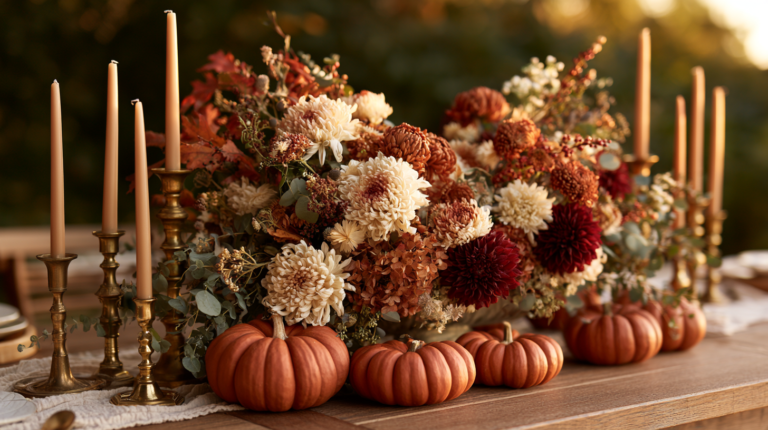
One coordinated backdrop. A single runner or tablecloth in the host’s palette — placed on the serving table before anything is set on it — provides the visual ground that makes everything placed on top of it read as part of the same spread. A plain warm cream or oatmeal linen runner, or a simple burlap runner in the Rustic Harvest direction, covers the institutional quality of most serving tables and unifies the mismatched vessels and containers placed on its surface. The backdrop is the cheapest and fastest single visual intervention available to a potluck host: it costs very little, takes under a minute to place, and produces a proportionally large visual return.
🍖 Potluck Tip
Transfer at least the main dishes into matching serving pieces as they arrive — even three or four shared platters make a dozen mismatched containers read as one coordinated spread. Keep the carry containers off the serving table entirely; the visual coherence comes from what is on the table, not from what is removed from it.

The Rustic Harvest Thanksgiving collection at Lush Party Boutique — dish labels and tent cards in the warm harvest palette for a styled potluck table.
Section 02 Organising What Gets Brought
A shared sign-up structure prevents the most common potluck problem — five people bringing the same dish — without requiring the host to dictate specific recipes or override personal traditions.
Categories, not specific dishes. A sign-up list with four category columns — starters and appetisers, mains and sides, bread and accompaniments, desserts and drinks — allows each contributor to bring whatever they make best or whatever feels most natural for their Thanksgiving tradition, while ensuring the spread has reasonable variety across course types. Specific dish requests are only necessary when one particular item is essential to the meal and no one is likely to bring it spontaneously — in which case the host claims it rather than assigning it. Categories with participant limits — three sides, two desserts, one starter — prevent any category from being over-represented and ensure that the table has at least one dish from each part of the meal.
Dietary labelling as a guest courtesy. Asking contributors to note any key ingredients on their labels — particularly common ones that guests may want to be aware of — is a simple courtesy that reduces the need for guests to ask questions about each dish individually during the gathering. The label template can include a small line for this information below the dish name: ‘contains: ’ followed by whatever the contributor chooses to note. This is a guest comfort measure rather than a strict allergen management protocol, and the host should communicate it as such — a light request rather than a formal requirement.
🍖 Potluck Tip
Group the table by course, not by who brought what — a labelled sides section and a labelled dessert section reads as organised; food scattered as it arrives reads as chaotic no matter how good it tastes. The course grouping takes thirty seconds to enforce as dishes arrive, and it is the single most effective organisational decision available to a potluck host.
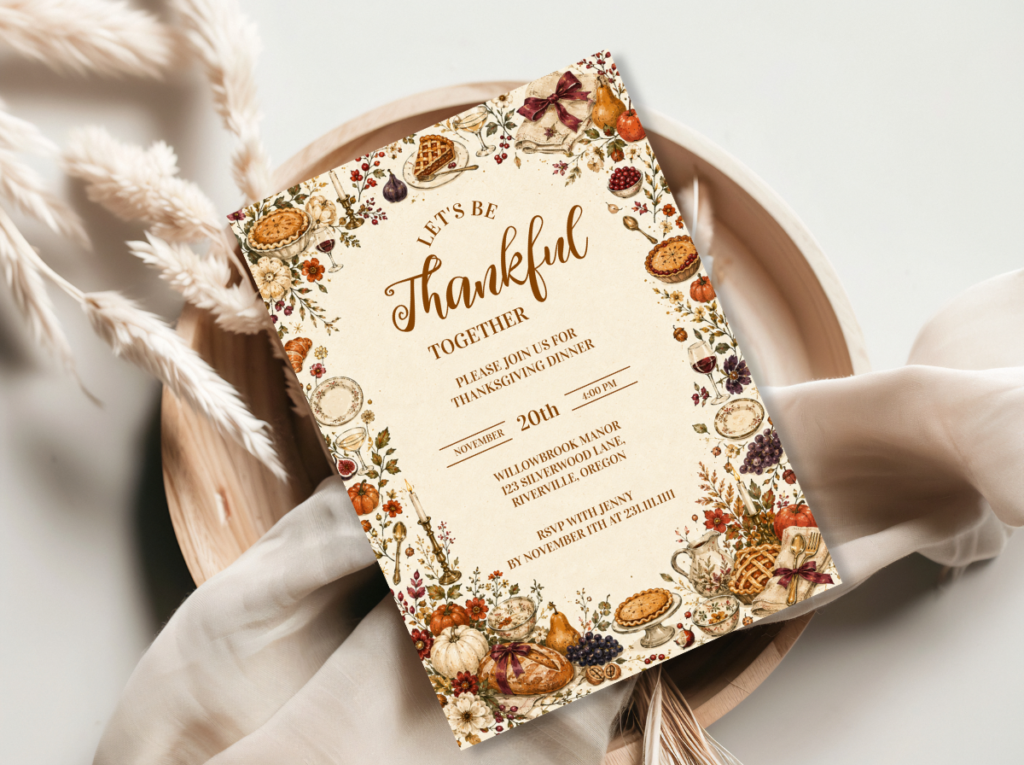
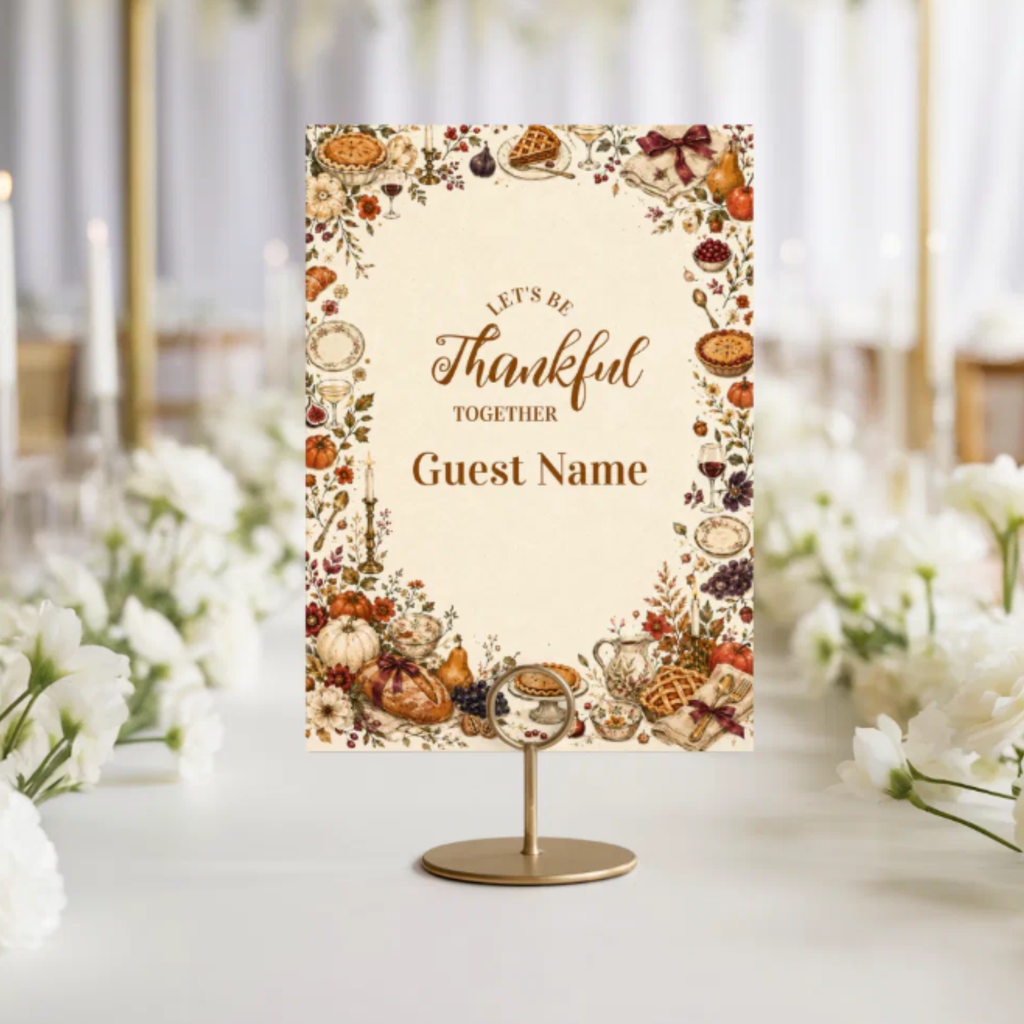
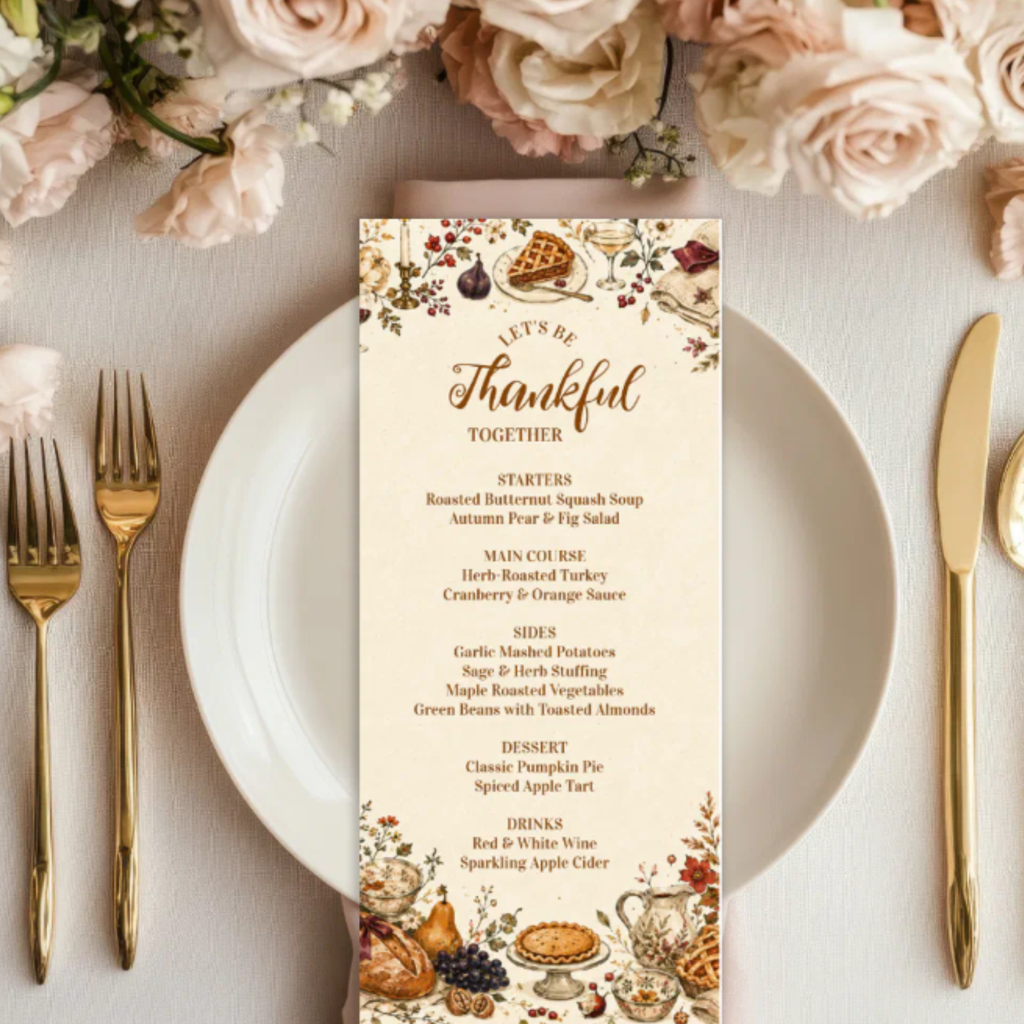
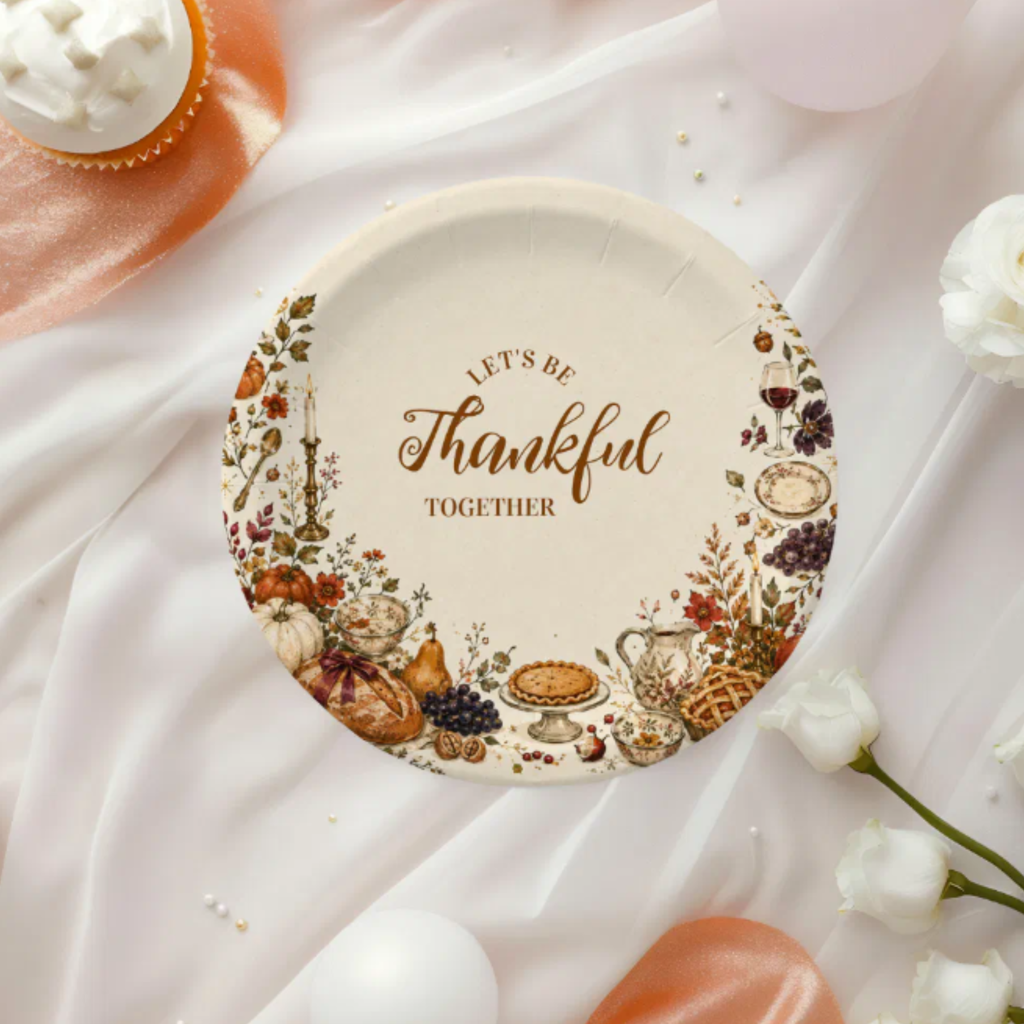
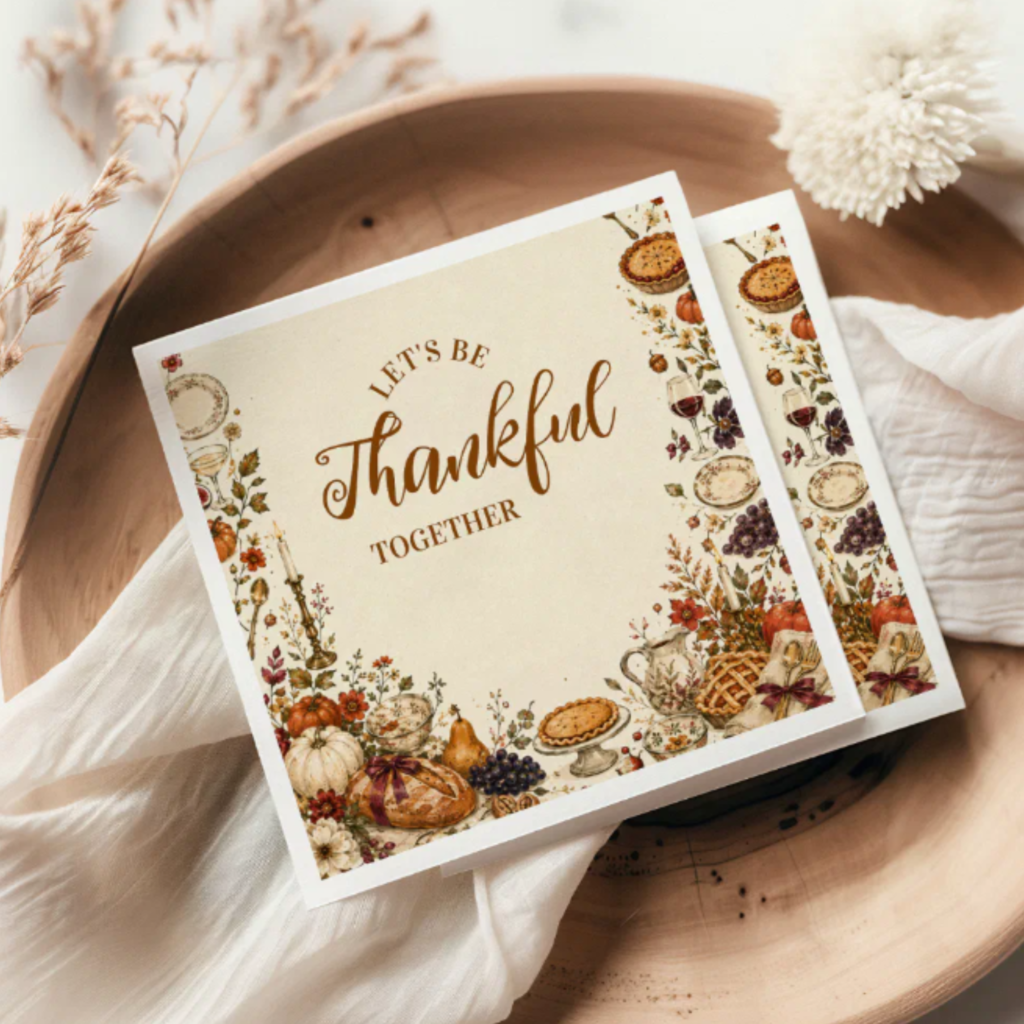
The Whimsical Thanksgiving Feast collection at Lush Party Boutique — playful seasonal stationery and dish labels for a potluck with more personality.
Section 03 Touches That Make It Feel Hosted, Not Just Assembled
Three light additions that shift the potluck from ‘food that people brought’ to ‘a celebration that someone organised’:
Place cards or a seating suggestion. A potluck does not require assigned seating — but a place card at each seat, even in a free-seating gathering, communicates that the host considered the physical setup of the space rather than simply putting out enough chairs. If the gathering is large enough that seating is genuinely optional, a simple ‘please sit wherever you’d like’ card in the table’s palette at a central position serves the same function: it signals that the host thought about the guest experience at the seat level, not just at the food-table level. Place cards from the Lush Party Boutique Rustic Harvest collection provide this finishing touch in the warm harvest palette.
A printed dish label set. Matching dish labels prepared in advance — printed rather than handwritten, in the table’s typeface and palette — are the printed element that most improves the potluck table’s appearance relative to its cost and effort. A set of twelve to fifteen printed tent cards in warm cream, sized to sit at the front edge of any serving vessel, can be prepared the day before and placed as dishes arrive without requiring any on-the-day printing or preparation. The labels also provide a useful reference for guests who want to know what they are eating without interrupting the host for information.
A separate drink station. Moving drinks off the main food table — to a side surface, a small rolling cart, or even a corner of a counter — frees visual and physical space on the food table for the dishes themselves, reduces the traffic congestion that happens when guests try to navigate both food and drink at the same table, and gives the drink station its own small moment of styling: a simple arrangement of cups, a pitcher or dispenser, and a small sign reading ‘Help Yourself’ in the table’s typeface. The drink station separation is the logistical detail most frequently overlooked at potluck gatherings and the one that most immediately improves the flow of the party once it is in place.
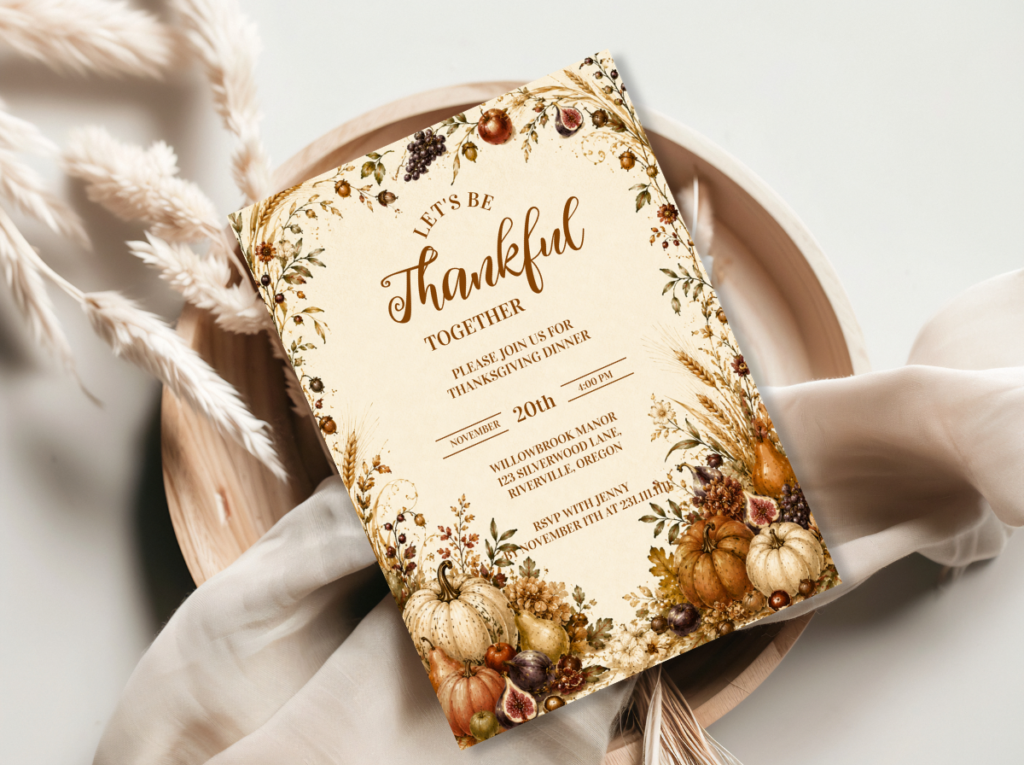
The Rustic Harvest Thanksgiving collection at Lush Party Boutique — place cards, dish labels, and harvest stationery for the fully hosted potluck table.
Frequently Asked Questions
How do I organise a Thanksgiving potluck so dishes don’t overlap?
A sign-up list with category limits is the most reliable tool: four columns (starters, mains and sides, bread and accompaniments, desserts and drinks) with a participant limit per category prevent any course from being over-represented. Share the list as soon as the gathering is confirmed — the earlier contributors can see what has already been claimed, the less likely duplication becomes. The host should claim the main dish or the item most central to the meal’s identity first, before the sign-up opens, so that the anchor of the spread is secured regardless of what else is volunteered. Specific dish requests beyond the anchor should be rare — category guidance is enough for most contributors.
How do I make a potluck table look put-together?
Three decisions produce the most visual coherence for the least effort. First, a single warm-toned tablecloth or runner across the full serving table before anything is placed on it — the backdrop unifies everything on top of it regardless of the vessel variety. Second, three or four matching serving platters provided by the host, into which the main dishes are transferred as they arrive — carry containers off the table, shared platters on it. Third, consistent printed labels at every dish in the same palette and typeface — the visual thread that makes the varied contents read as an organised spread. These three decisions together take under thirty minutes to execute and produce a food table that reads as designed rather than assembled.
Should I provide serving pieces for guests’ dishes?
Yes, if the goal is a visually cohesive table. The most practical approach is to have three or four matching platters and bowls in the host’s own collection available as a shared serving layer, and to transfer incoming dishes from their carry containers into these shared pieces as guests arrive. This does not need to cover every dish — prioritise the main and the most visually prominent sides, and leave individually portioned items or dishes in heat-appropriate containers in their original packaging. The host should communicate in advance that shared serving pieces will be available, so that contributors know they do not need to bring their best serving dish — a practical consideration that makes contributors more willing to bring food in functional carry containers rather than in borrowed or irreplaceable personal pieces.
Consistent Labels · Shared Platters · One Backdrop · Course Grouping
Shop Thanksgiving Potluck Stationery
Dish labels, tent cards, and place cards that tie a potluck spread together — warm harvest and whimsical feast directions.