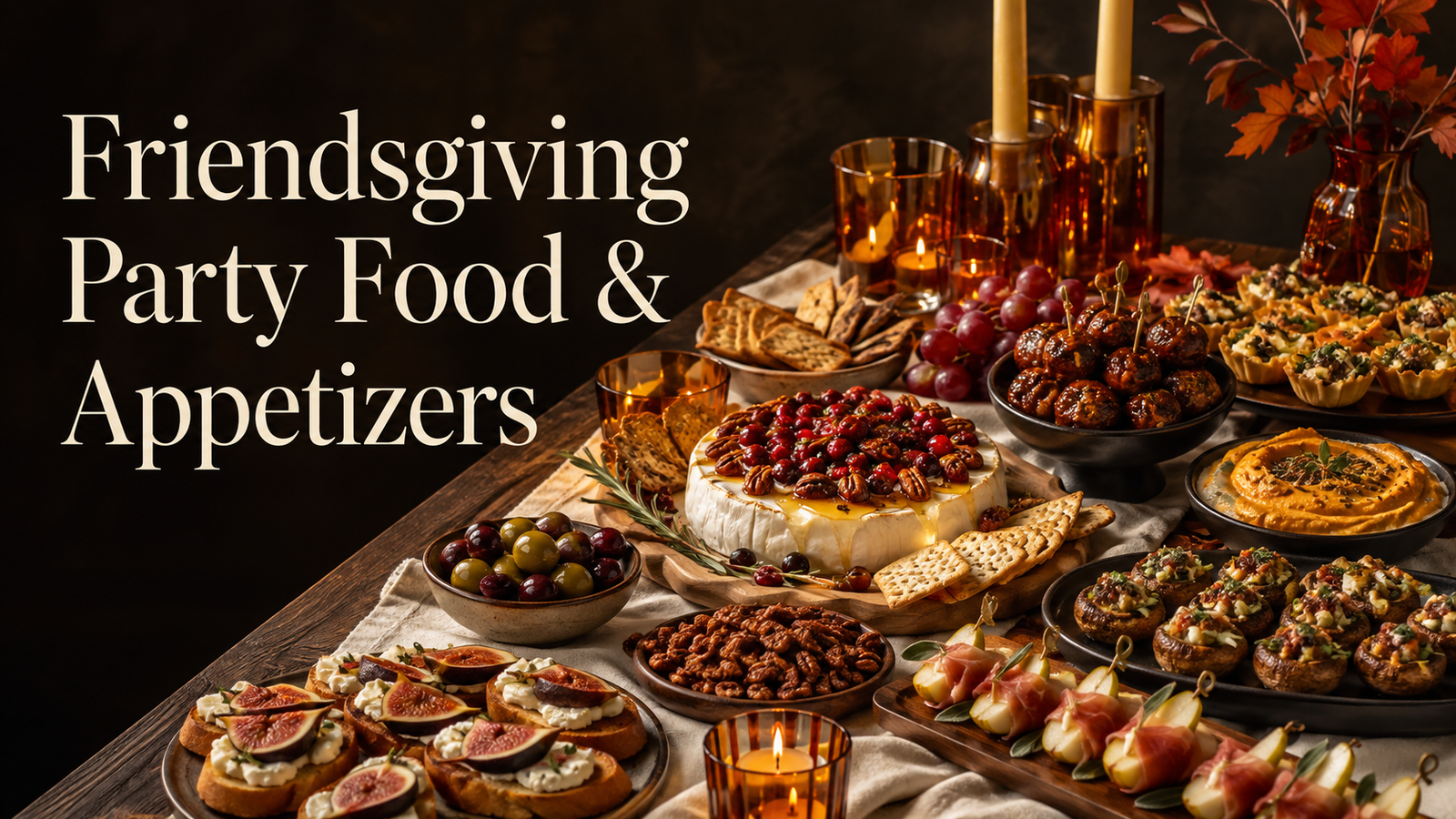
Friendsgiving Party Food & Appetizers
Friendsgiving · Food & Appetizers · Lush Party Boutique
Friendsgiving Party Food & Appetizers
How to coordinate a potluck spread that actually works — plus a more casual pizza-and-drinks format for the Friendsgiving that would rather skip the traditional spread entirely.
The food challenge at Friendsgiving is not what to cook — it is coordination. In a potluck format, the host’s job is less ‘prepare a meal’ and more ‘make sure the eight things that show up form a coherent spread rather than five variations on the same dish.’ That requires a little structure at the sign-up stage and almost no extra effort on the day. For hosts who want to skip the coordination problem entirely, there is a second option: a casual, shareable format built around pizza and a drinks station that abandons the traditional Thanksgiving spread altogether and leans into the dinner-party mood instead.
Both approaches are covered below.
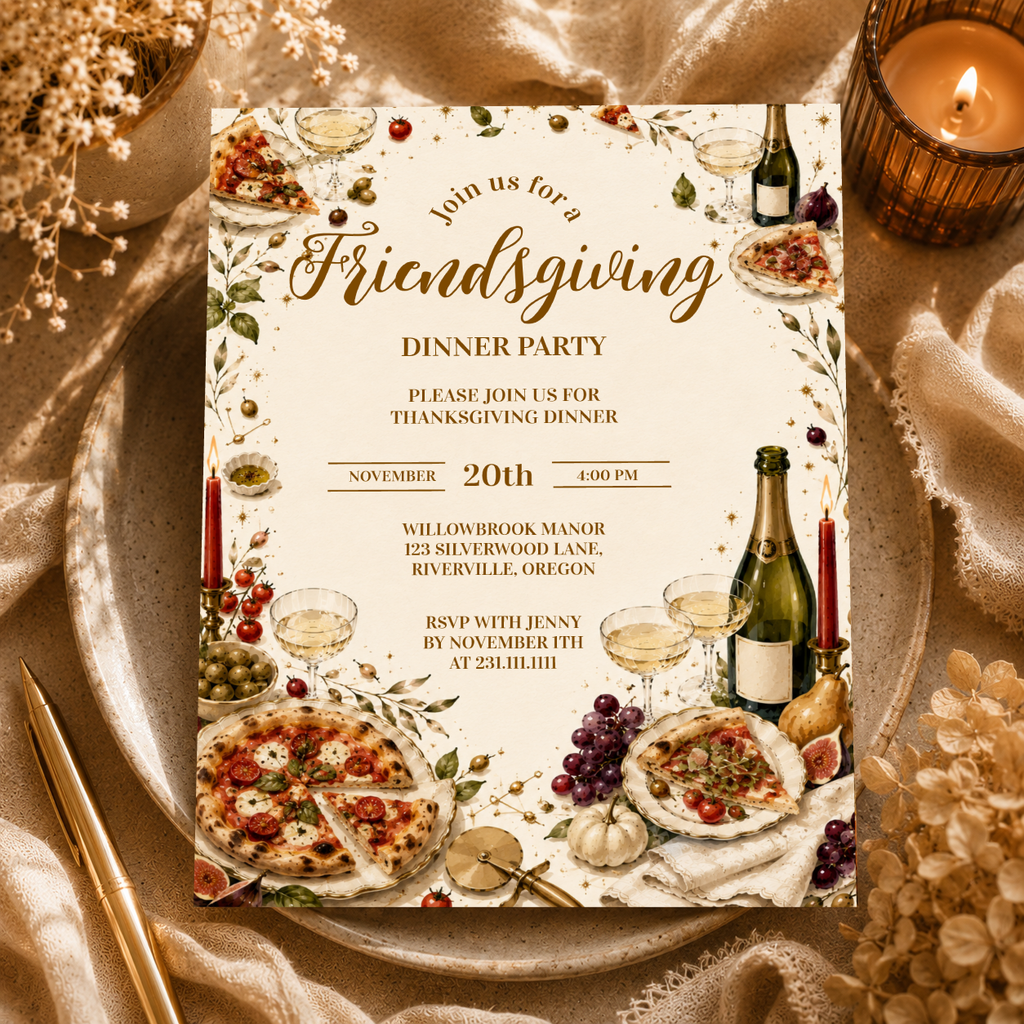
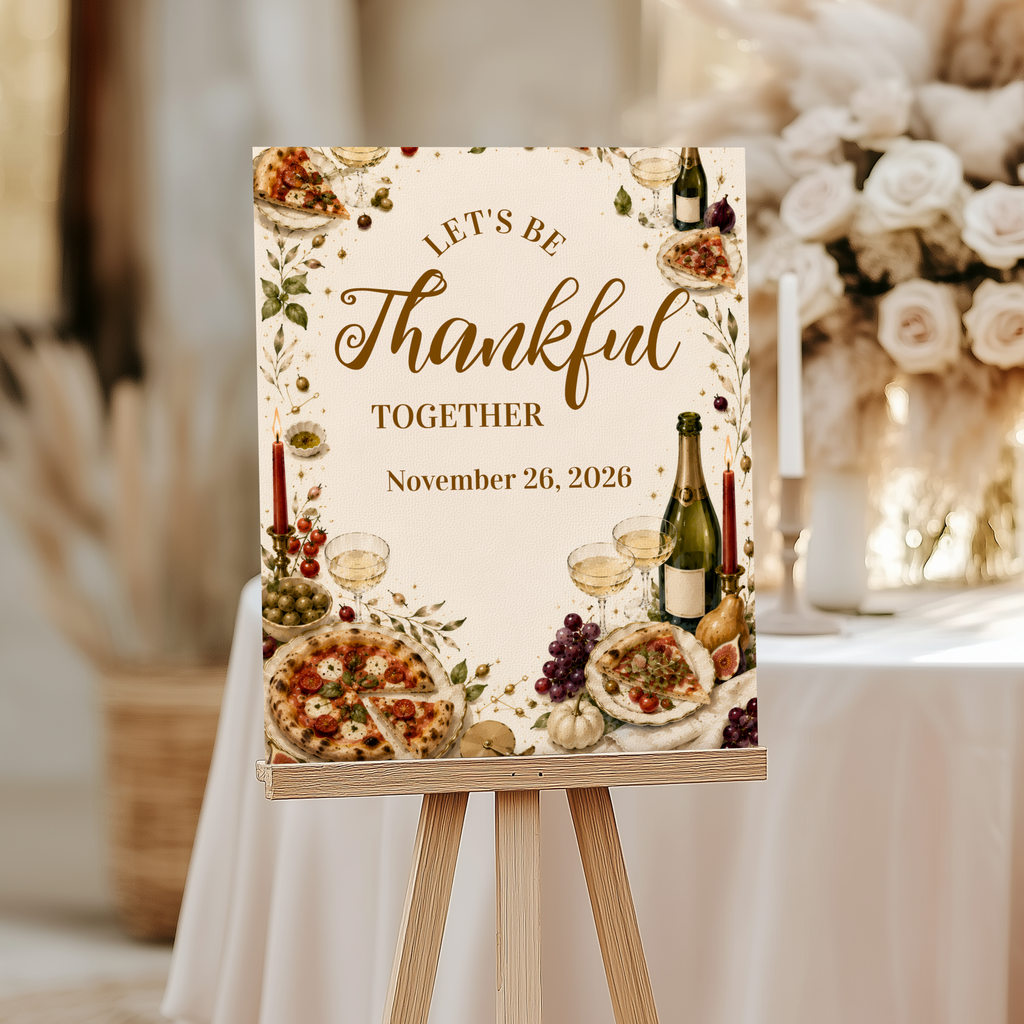
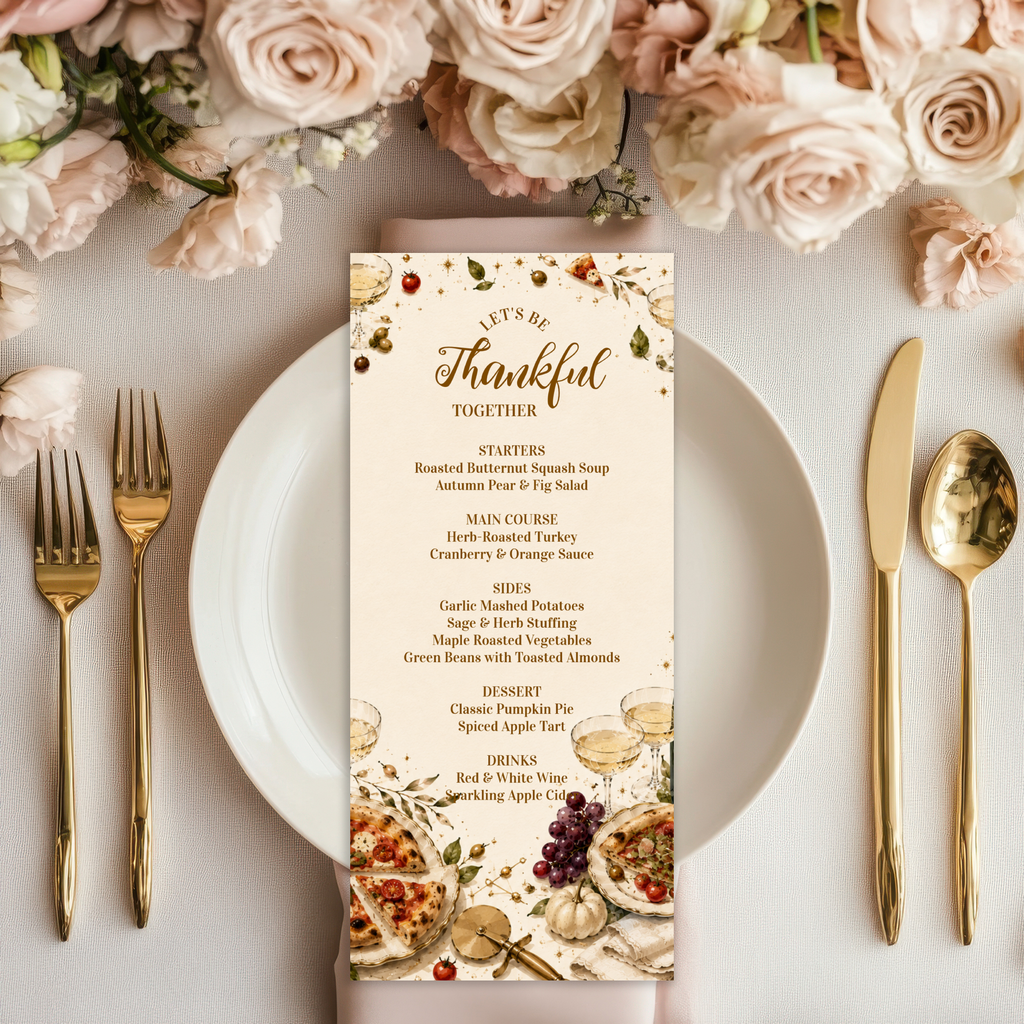
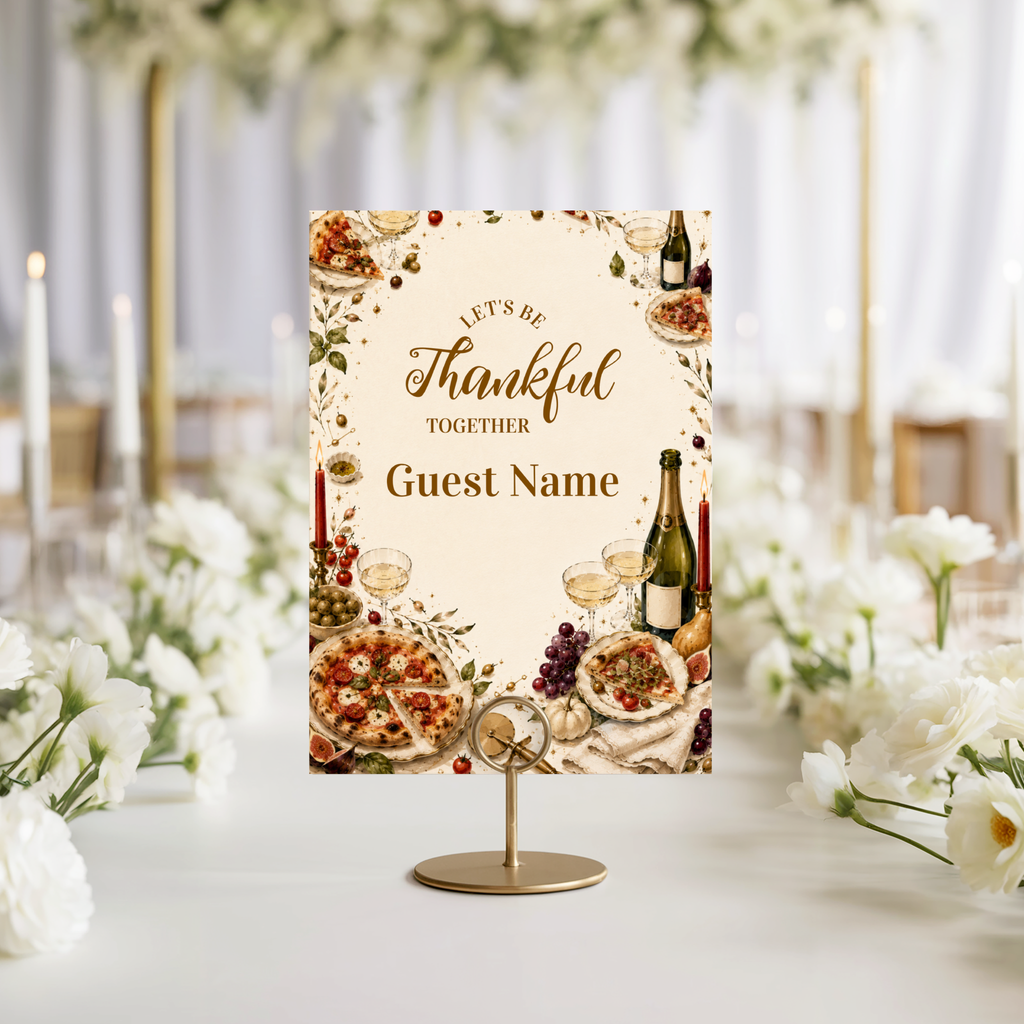
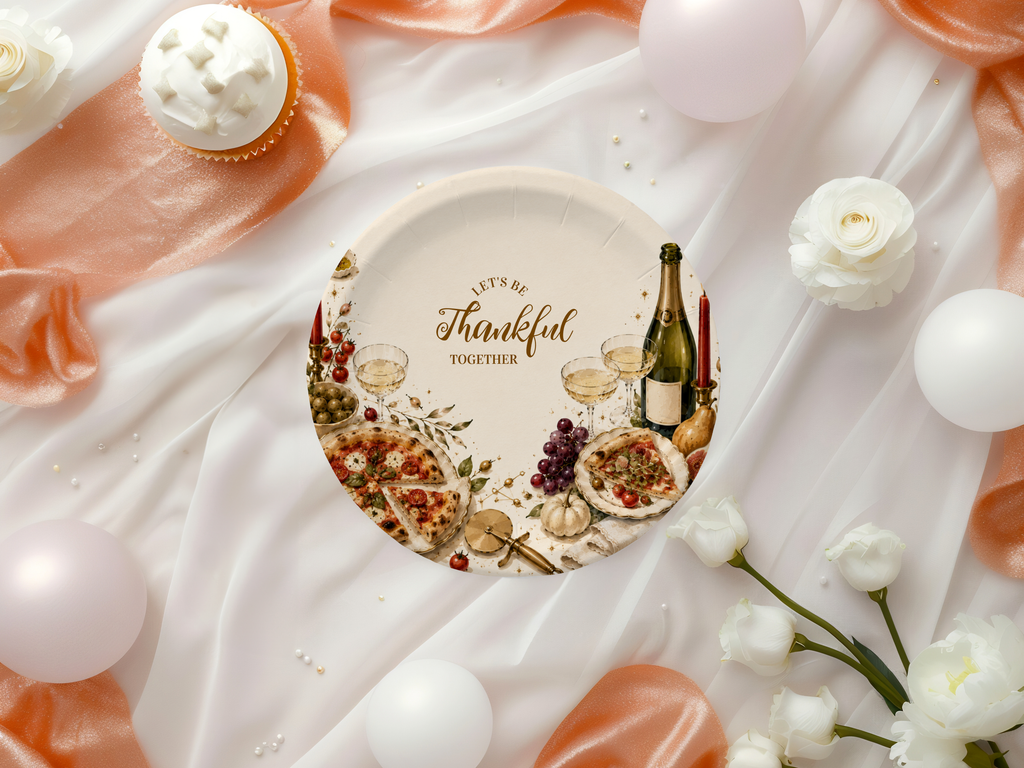

Browse the Pizza & Prosecco Friendsgiving collection at Lush Party Boutique — stationery and table labels for a more casual, shareable Friendsgiving format.
“A potluck runs on one thing: nobody bringing the same dish twice. Get that right and the food takes care of itself.”
Section 01 Planning Food for a Potluck-Format Party
A coordinated Friendsgiving spread needs three things that a single-host Thanksgiving dinner does not.
Assign by course, not by dish. A sign-up sheet organised as appetisers / mains / sides / desserts prevents the five-people-one-side-dish problem that derails most uncoordinated potlucks. The host sets the structure; guests fill in the slots. It takes five minutes to set up and saves the awkward ‘we have seven pies and no savoury dishes’ conversation on the day. Digital sign-up tools work for larger groups; a simple shared message thread or group note works for most friend-group sizes.
Plan for dietary variety. A friend group is more likely than a family table to include guests with vegetarian, vegan, or allergy needs — and less likely to have shared those needs in advance. Building in at least one clearly labelled option per course that covers common dietary needs (a plant-based side, a gluten-free dessert) avoids the situation where one or two guests can only eat two dishes from the whole spread. The labelling part matters as much as the planning part: a folded food card identifying the dish and noting key allergens is the most useful thing a host can put on the table.
The host owns one anchor dish or drink. Even in a potluck format, the host’s cooking contribution matters — not because it has to be elaborate, but because it grounds the gathering. One memorable dish or a well-built drinks station gives the host a specific point of ownership in the evening and gives guests something to talk about beyond who brought what. The anchor does not need to be the most impressive thing on the table; it needs to be done deliberately and served well.
🍽️ Food Tip
Label every dish as it is set out — a simple folded card with the dish name and any allergens takes two minutes to prepare and saves guests from guessing across a table of a dozen unfamiliar dishes. Food label cards from Lush Party Boutique can be printed in a matching palette and double as part of the table styling.
The Pizza & Prosecco Friendsgiving collection — food labels and table stationery for a coordinated, well-labelled Friendsgiving spread.
Section 02 A Casual, Shareable Direction — Pizza & Prosecco
For the Friendsgiving that does not want to coordinate a full traditional spread, there is a simpler format: shareable pizzas as the centrepiece of the meal, a drinks station with sparkling wine and non-alcoholic alternatives, and a table that reads as a real dinner party rather than a Thanksgiving recreation. It is lower-effort for the host and lower-stress for guests who are not confident bringing a dish to a formal spread.
The stationery for this format is where Lush Party Boutique’s Pizza & Prosecco Friendsgiving collection comes in: printed menus listing the evening’s pizzas, drinks station labels, and food cards that make a casual format feel deliberately hosted rather than assembled at the last minute.
🍽️ Food Tip
A build-your-own station — whether that is pizza toppings set out before baking, a selection of garnishes for drinks, or a dessert arrangement guests can customise — turns food into an activity. It fills the conversational gaps that a fully plated meal can create and gives the gathering more of a party feel than a seated dinner format alone.
The Pizza & Prosecco Friendsgiving collection — menu cards, drinks labels, and table stationery for the most casual Friendsgiving format.
Section 03 Easy Appetisers That Travel Well
For the potluck format, the most useful appetiser contribution is one that holds up being transported, can be served at room temperature or reheated in under ten minutes, and does not require last-minute assembly. The following categories consistently work in this context.
Appetiser Category
Boards and Spreads
A cheese and charcuterie board, a dip with bread, or a roasted vegetable spread: all transport flat, require no reheating, and can be arranged directly on a serving board on arrival. They also fill the table visually and give guests something to eat before the mains arrive. A labelled board with the component names — useful for allergy and dietary reasons — reads as more deliberately prepared than an unlabelled plate.
Appetiser Category
Room-Temperature Baked Items
Savoury tarts, flatbreads, crostini toppings in a container, stuffed pastries: all bake at home, transport in a covered tin, and serve at room temperature without any quality loss. They also portion easily, which matters on a crowded shared table where serving equipment may be limited.
Appetiser Category
Dips and Sauces
Hummus, warm bean dips, roasted garlic spreads, or any sauce-based appetiser that travels in a sealed container and serves with bread or crackers provided by the guest or the host. Dips are reliably inclusive of most dietary needs, which makes them a useful contribution in a group with varied requirements.
Appetiser Category
Individually Portioned Items
Skewers, small cups, individually wrapped items, or anything that does not require a serving spoon and a shared platter to distribute: the easiest category for a crowded, informal table where guests may be standing or moving between conversations rather than seated throughout.
The Friendsgiving Party collection at Lush Party Boutique — food labels, menu cards, and table stationery for every Friendsgiving food format.
Frequently Asked Questions
How do I organise a Friendsgiving potluck so dishes don’t overlap?
Set up a sign-up sheet organised by course — appetisers, mains, sides, desserts — before sending the invitation, and ask guests to claim a slot when they RSVP. A shared document or a simple message thread works for most friend-group sizes. Include the number of slots per course (two appetiser slots, two side slots, and so on) so guests can see what is still needed. Giving the host one slot labelled ‘drinks station’ sets the expectation that this is the host’s contribution and signals to guests that they are covering food.
What food travels well for a potluck-style party?
The most reliable categories are boards and spreads (cheese boards, dip platters, roasted vegetable arrangements that transport flat and need no reheating), room-temperature baked items (savoury tarts, flatbreads, pastries that hold their texture at room temperature), dips and sauces in sealed containers, and individually portioned items like skewers or small cups that do not require shared serving equipment. The common thread: anything that does not need last-minute assembly, reheating longer than ten minutes, or refrigeration after arrival.
How do I handle dietary restrictions across a friend group?
Ask at the sign-up stage rather than after: a single line in the sign-up message (‘let us know any dietary needs and we’ll make sure there’s something for everyone per course’) collects the information before the menu is set. Aim for at least one plant-based option per course and one clearly labelled gluten-free option. The labelling on the day matters more than the planning: a folded food card listing the dish and noting key allergens (nuts, dairy, gluten) saves guests from having to interrogate every dish and makes the host’s preparation visible in the most practical way possible.
Lush Party Boutique · Friendsgiving Food Stationery
Shop Friendsgiving Food Labels & Stationery
Food cards, menu labels, and table stationery for every Friendsgiving food format — from a coordinated potluck spread to a casual pizza night.