Kids & Teen Friendsgiving Party Ideas
Friendsgiving · Kids & Teens · Lush Party Boutique
Kids & Teen Friendsgiving Party Ideas
Friendsgiving for younger guests — what changes when the table includes kids or teens, how to run a classroom version, and how to fold children into an otherwise adult gathering without running two separate parties.
Friendsgiving with kids or teenagers is not a smaller, quieter version of the adult dinner party — it is a structurally different event that works on a different logic. The adult Friendsgiving is built around conversation and a long, relaxed table. A Friendsgiving with younger guests needs a built-in activity, a food format that accounts for pickier eaters, and a defined end time or schedule. Get those three things right and the age mix becomes one of the things that makes the gathering memorable rather than one of the things that makes it complicated.
This guide covers adaptations for three contexts: a Friendsgiving specifically for kids or teens, a classroom or school-party version, and a mixed-age gathering where children are present alongside adults.

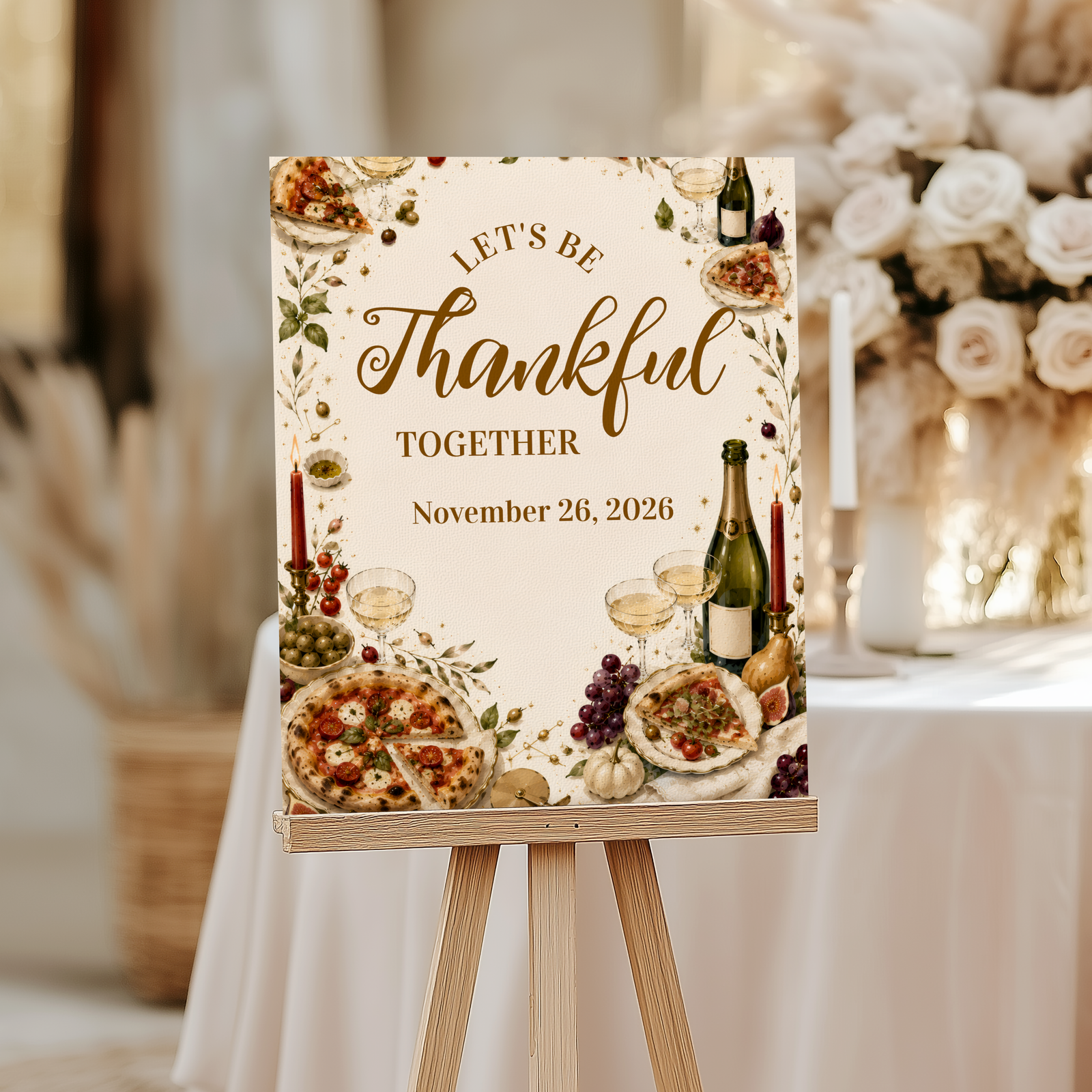
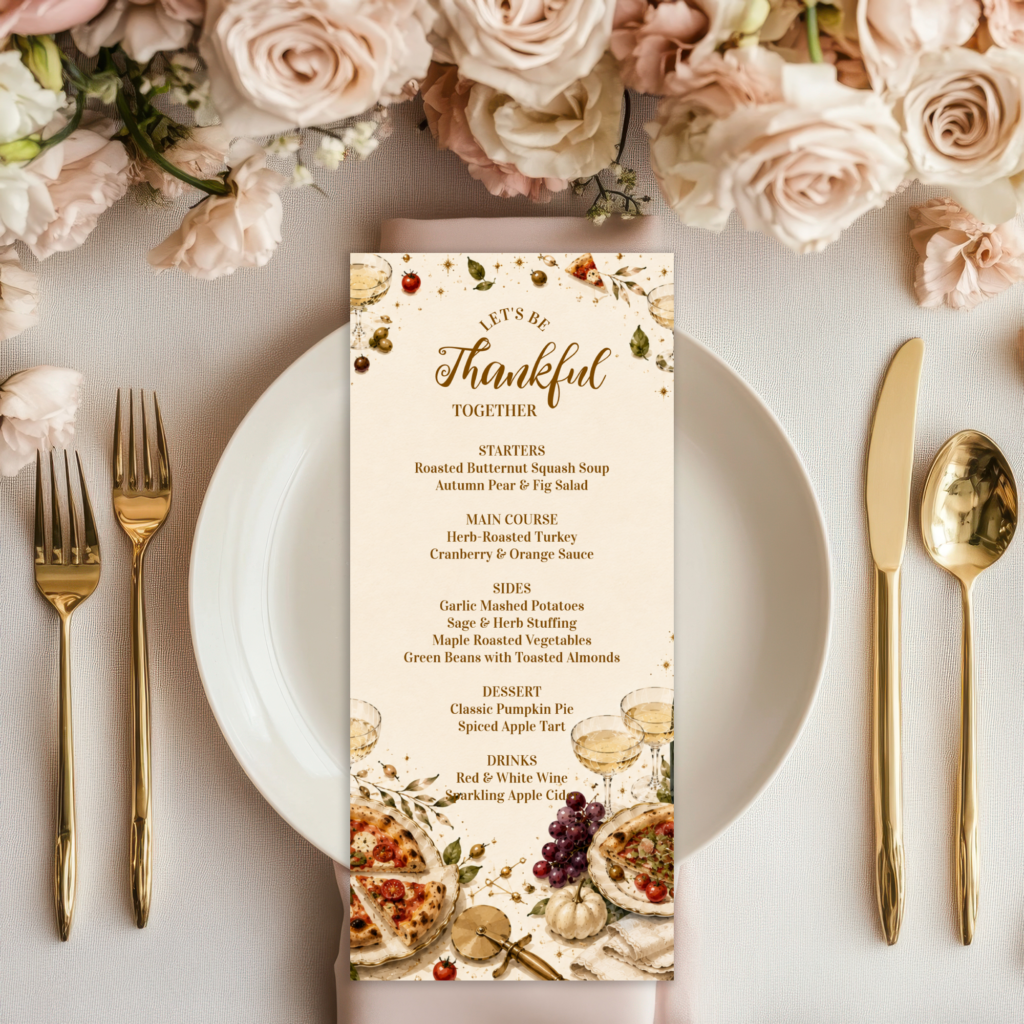
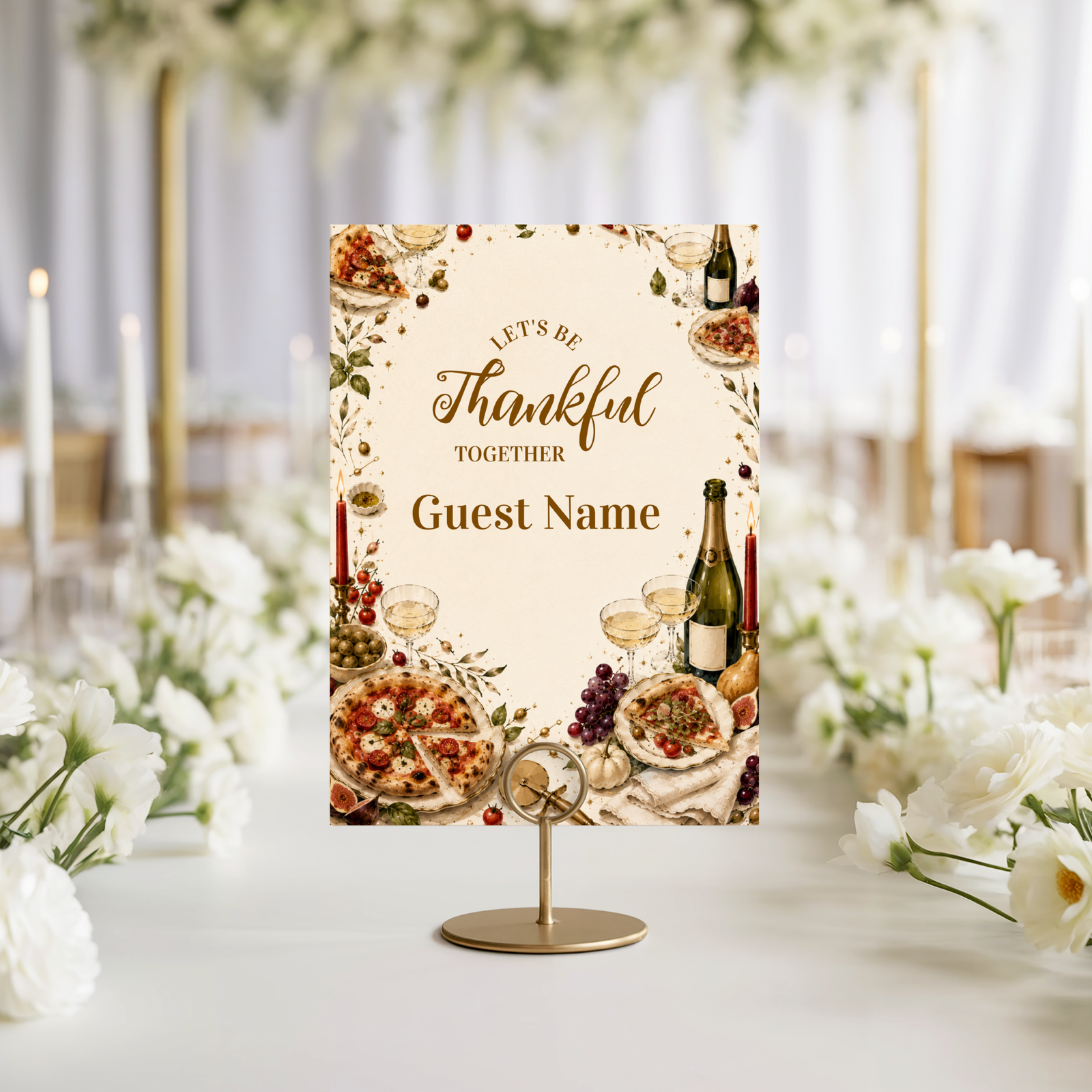


Browse the Friendsgiving Party collection at Lush Party Boutique — invitations, table cards, and stationery for every Friendsgiving format.
“Gratitude — but make it age-appropriate. The best Friendsgiving activity for any age is one that produces a clear output: a list, a drawing, a card, a jar of notes. Something to look at, keep, and return to.”
Section 01 Adapting Friendsgiving for a Younger Crowd
Three adjustments separate a kid- or teen-friendly Friendsgiving from the adult version.
Activity-anchored, not conversation-anchored. Adult Friendsgiving runs on cocktails, conversation, and a long table. Younger guests need a built-in activity at the centre of the gathering — something with a clear start, middle, and outcome — rather than an expectation that everyone will entertain themselves through talking. For younger children: a simple gratitude craft (decorating a card or a paper leaf with something they are grateful for, to be collected in a shared jar). For older children and teens: a group game with a low barrier to entry, a group cooking or decorating activity, or a trivia round themed around the season. The activity does not need to be long — twenty to thirty minutes is enough — but it needs to be planned and scheduled rather than improvised.
Familiar food alongside the grown-up dishes. A potluck with adults-only contributors will land some dishes that younger guests simply will not eat. A kid-friendly side or two — something simple, familiar, and reliable — prevents food from becoming a source of friction in an otherwise easy gathering. This is the host’s food job, not the guests’. One familiar dish at the centre of the spread takes the pressure off younger guests and keeps the table running smoothly.
Shorter event or a clear schedule. A four-hour Friendsgiving dinner works for adults who want to linger. It does not work for younger children or for teens who are bored past the two-hour mark. Either plan for a shorter event window (two to two and a half hours is workable for most ages) or build a clear schedule into the gathering: arrival and food, then the activity, then dessert, then departure. A schedule is not a limitation — it is what prevents the energy from collapsing in the middle of the afternoon.
🍂 Hosting Tip
Build one twenty-to-thirty-minute activity into the middle of the gathering — a gratitude craft, a group game, or a seasonal activity. It gives younger guests a clear high point and a reason to stay engaged rather than expecting them to fill time through adult-length conversation.
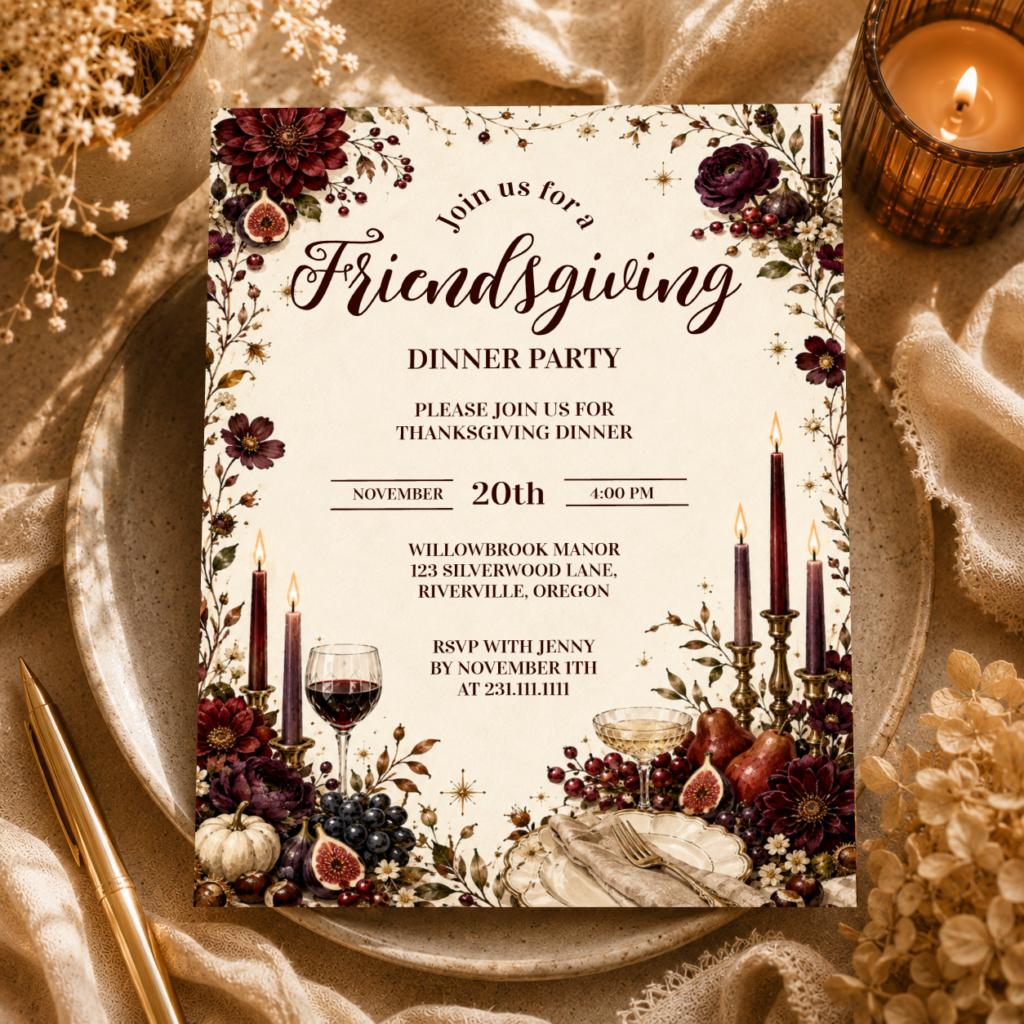
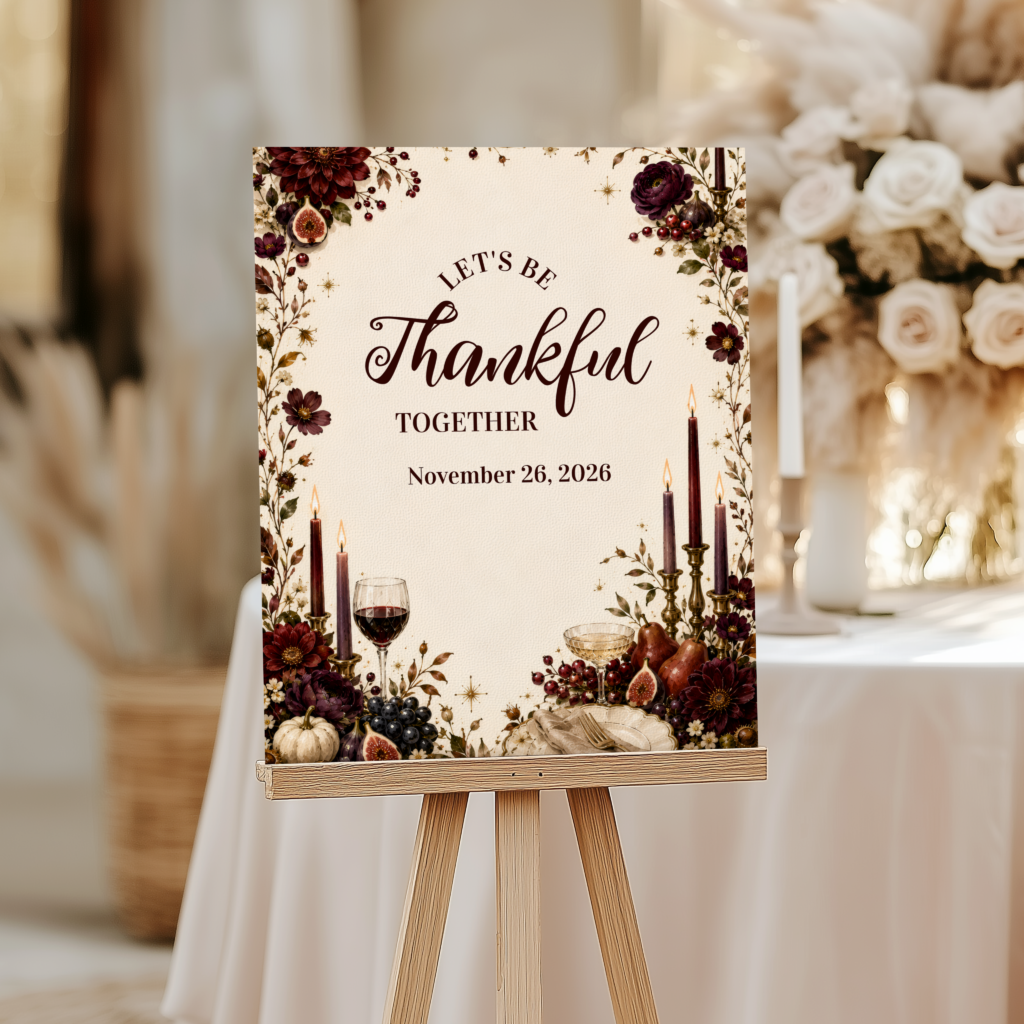
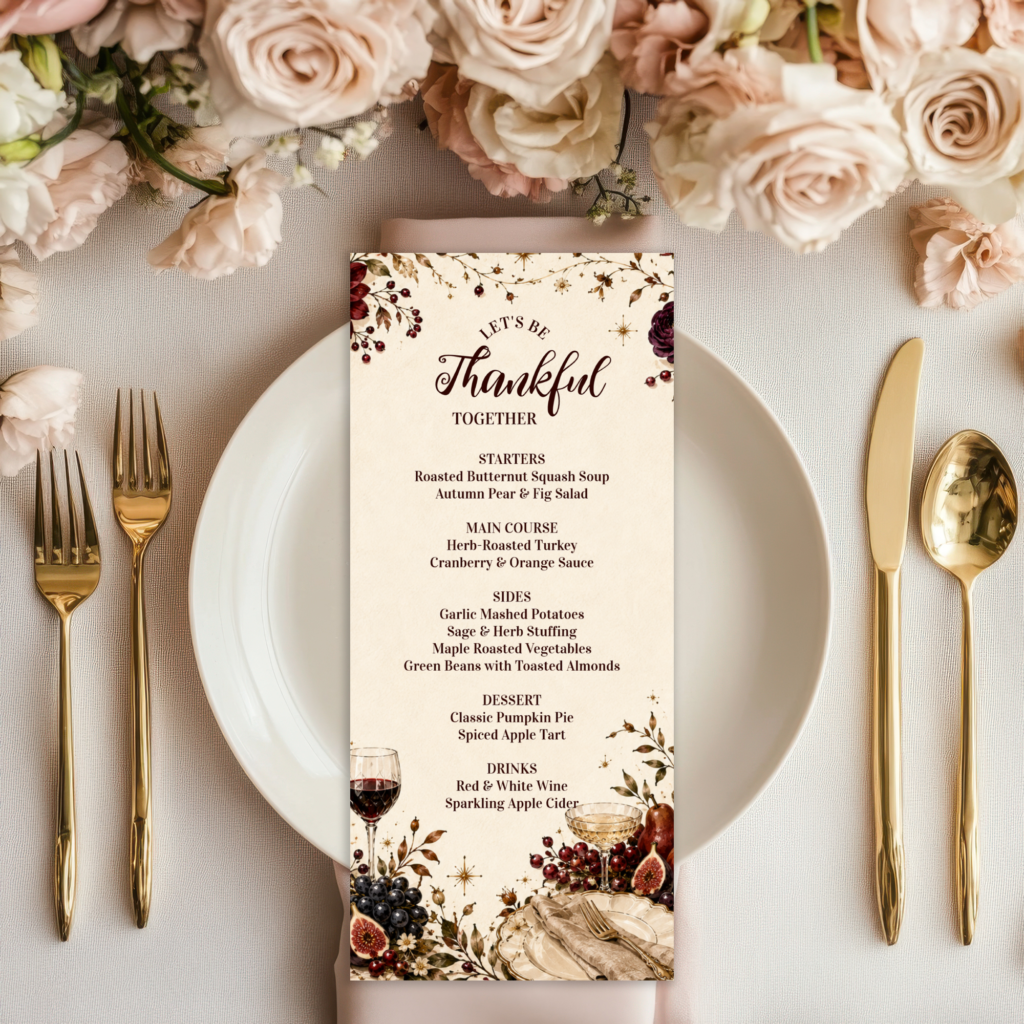
The Friendsgiving Party collection at Lush Party Boutique — invitations and table stationery for every age and format.
Section 02 School & Classroom Friendsgiving Parties
A school or classroom Friendsgiving is a distinct format from a home gathering and needs different planning assumptions. The space is fixed, the guest list is assigned rather than chosen, the food options are more constrained, and the time window is usually shorter than a home party.
Classroom Format
Keep food simple and allergy-aware
A classroom Friendsgiving food component should be straightforward and allergy-considerate. Pre-packaged, individually portioned items are the easiest format — they require no shared serving, reduce cross-contamination risk, and travel without needing refrigeration. If the class is preparing anything together, keep it no-cook or minimal-equipment to stay within what the classroom setting allows. Check with the teacher or school guidelines before planning any food activity; policies vary significantly between schools and age groups.
Classroom Activity
A gratitude round or visual activity
A gratitude circle — where each student names one thing they are grateful for — is the simplest and most Friendsgiving-appropriate classroom activity, requires no materials, and takes under fifteen minutes with most class sizes. A paper gratitude chain (each student writes something on a strip and the strips are linked into a chain) or a shared gratitude poster produces a visual output the class can keep up through the season. Both work for a wide age range and require minimal setup.
Classroom Stationery
Printed place cards or activity cards
A simple printed card — a Friendsgiving-themed activity sheet, a gratitude prompt card, or a small name card for each student’s desk — is the stationery element that does the most work in a classroom setting. It makes the activity feel deliberately planned and gives students something to take home. The Friendsgiving Party collection at Lush Party Boutique includes printable stationery elements that can be adapted for a classroom setting.
🍂 Hosting Tip
Keep classroom Friendsgiving food simple and pre-packaged where possible — the restrictions around shared or prepared food in a school setting are typically more stringent than at a home gathering, and what works in one classroom may not work in another.
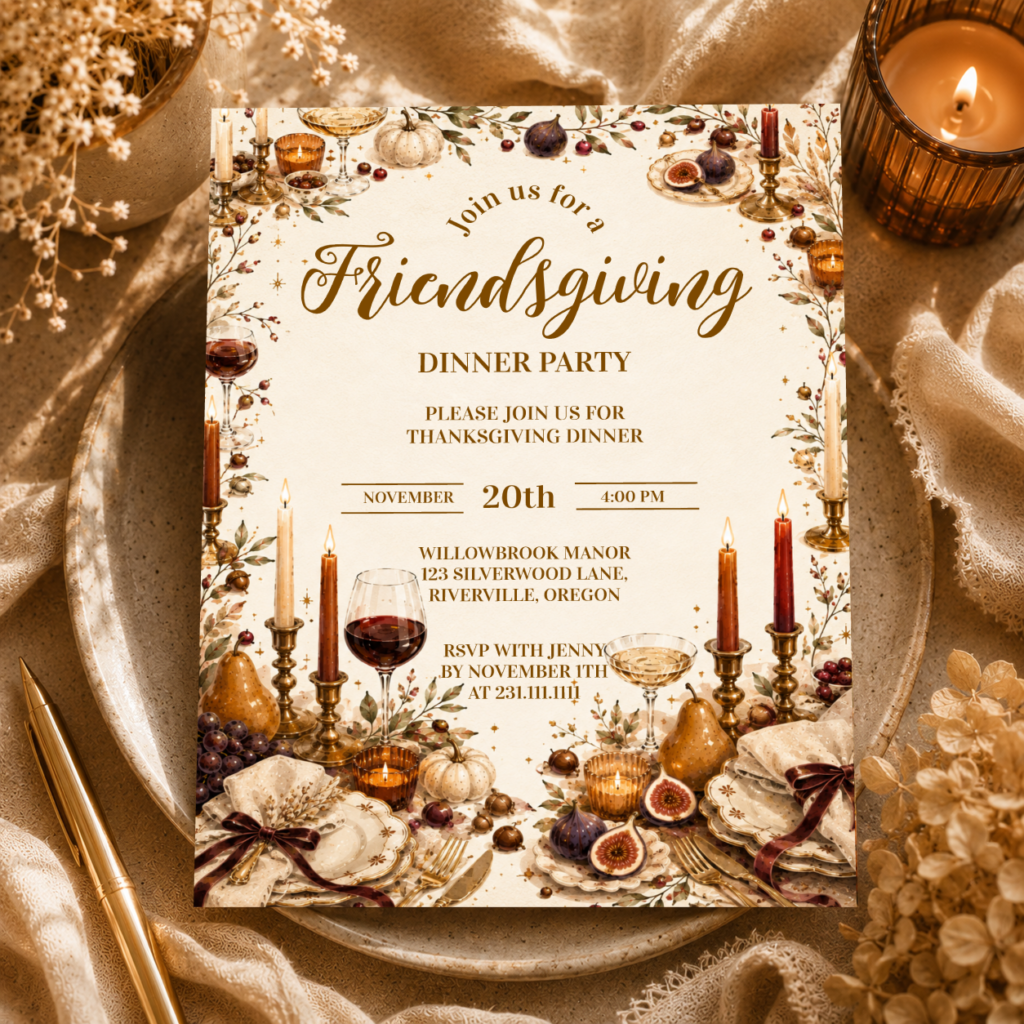
The Friendsgiving Party collection — printable invitations and stationery for a classroom or school Friendsgiving event.
Section 03 Including Kids at a Mixed-Age Friendsgiving
A mixed-age Friendsgiving — where children are present alongside adults rather than hosting a separate party — works best when the children have a designated space within the same gathering rather than being expected to sit through an adult-paced dinner for the whole event.
A kids’ corner or secondary table. A separate small table or a clearly defined area within the same room as the adult table gives children their own zone without segregating them from the gathering. A few simple activities on the kids’ table — colouring pages, a gratitude card to fill in, a small seasonal craft — gives younger guests something to do during the parts of the gathering that are adult-paced. The kids’ table does not need to be elaborate; it needs to be somewhere children feel they belong rather than somewhere they are tolerating an adult event.
A shared activity moment. One activity that works across age groups — a group gratitude round, a trivia question, a shared game with simple rules — gives the gathering a moment where adults and children are doing the same thing at the same time. It bridges the two tables without requiring children to sustain adult-length conversation or adults to sustain children’s-party-level energy.
A clear food option for younger guests. The same principle as the kids-specific party applies at a mixed-age gathering: one familiar, reliable food option at the children’s end of the table prevents food from becoming a problem. At a mixed-age potluck, the host can request that one contributor bring a more universally appealing dish as part of the sign-up, or provide it themselves as their host contribution.
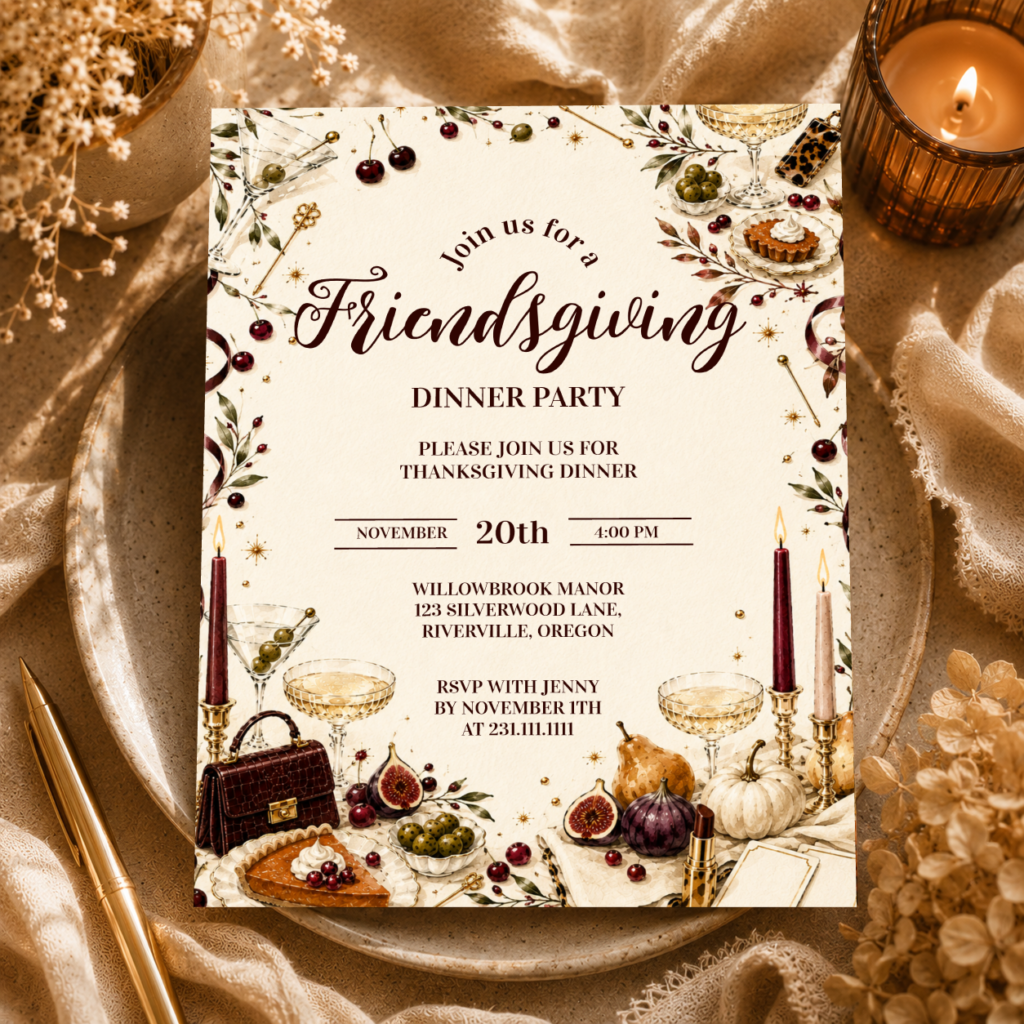
The Friendsgiving Party collection — invitations and stationery for a mixed-age Friendsgiving gathering.
Frequently Asked Questions
How do I include kids at an otherwise adult Friendsgiving?
Set up a kids’ corner or a secondary small table within the same room as the adult table — a few simple activities (colouring pages, a gratitude card, a small craft) give younger guests something to do during the adult-paced parts of the evening without needing to run a separate party. Include one activity moment that works across all ages — a group gratitude round, a trivia question, or a shared game with simple rules — so that the gathering has a point where everyone is participating in the same thing. One familiar food option at the children’s end of the table prevents food from becoming a source of friction.
What activities work for a school or classroom Friendsgiving party?
A gratitude circle — each student names one thing they are grateful for — is the simplest and most reliably age-appropriate classroom activity. A paper gratitude chain, where each student writes on a strip and the strips are linked together, produces a visual output that can stay up in the classroom. Both require minimal or no materials and work for a wide age range. For a slightly more active option, a short seasonal trivia round or a collaborative classroom poster works well. Keep any food component simple and pre-packaged, and check school guidelines before planning anything that involves shared or prepared food.
How is a teen Friendsgiving different from one for younger kids?
Teens are closer to the adult dinner-party dynamic than younger children — they can sustain longer conversations and do not need the same level of built-in structured activity — but they are less patient with a slow-paced evening that feels like a family obligation. The adjustments for a teen Friendsgiving are: a clear social hook rather than a general gathering (a themed menu, a game night format alongside the food, a specific film or playlist), a shorter and looser timeline than an adult dinner, and food that feels chosen for them rather than adapted from an adult spread. Teens are more likely to engage with a pizza-and-games format than a potluck dinner-party format.
Lush Party Boutique · Friendsgiving Collection
Shop the Friendsgiving Party Collection
Invitations, place cards, and activity stationery for every Friendsgiving — kids, teens, classroom, or mixed-age.